Birth, Breastfeeding, Courage, Kindness, Learning, Midwifery and birth, New parents, Newborn, NHS, Postnatal care, Teaching, Women's rights

Seeing the whole picture 

Each person we meet and care for  has their own story. 

As health care workers we must keep striving to tune into those that we care for – humility is needed and an ability to connect. Digital technology is a huge part of record keeping so it’s essential to realise that ‘CARE’ is not simply a tick box exercise but in fact a multi dimensional emotional process that may not have a solid beginning or ending . 

Trying to step into another humans story is a spiritual art form   – the way that we listen as well as the way we speak can have an immense impact on what a person imparts. A brusque manner can inhibit a connection, prevent sharing of valuable information, foster a disjointed attitude and is totally destructive to the priceless treasure of two way communication and empathy . A kind compassionate manner however, can help a person to open up and share information about themselves by helping them to relax and feel a sense of trust towards the other person. There are some people who have this off to a fine art and if you know such a person watch and learn from them you will gain so much. 

As midwives If we exude warmth and kindness we will send out positive connections – this will improve the oxytocin response and give women a feel good factor about themselves which will facilitate positive pregnancy ,labour, birth and breastfeeding . We underestimate the power we have to influence women and their ability to nurture themselves and their young . 

The midwife in the operating theatre setting who sends out signals of peace and calm by helping the woman to have skin to skin contact with her newborn is instrumental to the health of the world – she is brave and courageous and more than that she epitomises “human-kindness” itself.

The midwife who is able to read signals from the new father and help him to open up and see his strengths and yet embrace his own vulnerability is an asset to the family unit. 

The midwife who acts as an advocate for the same sex couple who want to avoid induction yet at the same time stay safe helps them to feel like they have been empowered and respected yet also like it’s their own choice . 

These are all examples of the wonderful work that midwives do and it’s time to celebrate all the admirable midwifery role models out there that inspire so many . 

Let’s all keep doing what we do well and try to improve a little each day . Let’s not stay still or remain where we are but let’s keep moving forwards for the mothers the fathers and the children of the universe. The world needs positive role models in midwifery some are visible some are hidden so seek them out shine a light on them and give them a loud cheer . 

Thankyou for reading – please be kind 

Jenny ❤️

Birth, Breastfeeding, Cancer, Children's week, Courage, Dying, Kindness, Learning, Midwifery and birth, NHS, Nursing, Teaching

“it just might just be you”

hope this poem gives you a view
To be kind to others & to yourself be true 

Hospitals, clinics & community work

Its fellow humans you’re caring for so please don’t shirk 

They need your love,passion, time & explanation  

Please focus on the way you give communication 

Consider your language & the way you speak

Empathy is strength , it does not mean you’re weak

Holding a hand & reassurance ain’t just talk 

Its shows through your eyes – means your walking the walk  

The person you are caring for is a human other

-a sister, brother,friend,father, mother

Be mindful of their thoughts and the way  they might be feeling

From an illness or accident that’s left them reeling 

Treat and approach colleagues with zero hierarchy 

collaboration doesn’t support any of that malarkey 

See the whole human, not  just the condition

Be holistic and please let this be your sole mission

Allow care,competence, kindness to guide you through 

As one day that “person”  – well it just might be you 

@JennyTheM 

Babies, Birth, Breastfeeding, Discharge from hospital, Kindness, Learning, Midwifery and birth, New parents, NHS, Postnatal care, Skin to skin contact, Teaching, Women's rights

Transfer from hospital to Community care – planning in maternity services 

There is so much written about discharge planning for Care of the Elderly / Unscheduled care / patients requiring rehabilitation .

Currently there are extra pressures on maternity services and I have set out my objectives as to why I want to discuss postnatal discharge planning below 

1.To highlight beacons of positivity 

2.To inspire discussion 

3. To make discharge planning an intrinsic part of the admission process 

4. To identity where a same day transfer should not be promoted

5. To make the actual ‘time of discharge’ a governance issue  

6. Share good practice and eliminate bad practice 

7. Raise the profile of effective discharge planning in maternity services 

I have learnt from others and by listening to families how the NHS could streamline the discharge process I’m certain that this would make a positive impact on staff time , families understanding , effective communication , reduce complaints and develop a well rounded understanding of the  discharge process. 

Going home with a newborn is seen as an easy and smooth process so my blog will try to help parents as well as midwives and maternity workers to see that this is not always the case. 

The best time to be discharged home is in the morning , however the pressure on postnatal wards is immense and they have one of the fastest turnovers in the NHS . So often we hear of women and newborn being sent home at ridiculous hours and  HERE is an article about this in Mother and Baby 

So how can we streamline the discharge process ? 

A. Find out if the family have transport home 

B. Start the discharge paperwork by checking address and phone number are correct 

C. Ensure medication to take home is requested as soon as possible 

D. Promote and explain why prolonged skin to skin contact will ensure not only breastfeeding success but also maternal and newborn wellbeing and that continued skin to skin contact is important as well as talking to the newborn and feeling calm (it’s crucial to discuss co-sleeping and I usually direct parents to ISISSLEEP as well as explaining – I’m not going to go into depth about this now, but  I do with parents.  

E. Ask about support at home – visitors who come and help are very valuable and aid recovery and coping . At the same time it’s important that the new family have some time alone in order to gain confidence in being new parents and learning to recognise various cues that their newborn makes .  

F. Go through thoroughly signs and symptoms of illness for mother and baby and mention sepsis – any infection caught early improves the outcome. 

G. Ensure all levels of midwifery staff are competent to discharge women and babies home – in busy times when there are pressures on the service this will facilitate an “all hands on deck” situation 

H. Employ a discharge facilitator who can assist clinical staff to organise the paper trail 

I. Have a generic checklist to refer to primarily so that women and families can see what the process entails and secondly so that staff do not miss any of the steps involved and this will avoid mistakes and maintain communication at all levels .  

J. The first point of contact in regard to any queries should always be the labour ward and / or community midwife . Midwives are responsible for postnatal care up to 6 weeks post birth – I am proud to say that when women present at labour wards they are seen quickly – a walk in centre or a triage service are not equipped to deal with postnatal care – midwives are . 

Explanation, discussion , allowing time and two way communication are all integral to a successful discharge process . I like to tell families that the discharge is in effect a transfer of care to the community midwifery team and also what to expect from the visit. Midwives do not expect families to be up , dressed and ready with the house perfect – they are visiting to see how families  are feeling and coping . To assess if the baby is feeding well and to give support . 

Rushing the process because of pressure has no value and affects communication in a negative manner – it’s so valuable to discuss why discharging takes time at antenatal group and have information on discharge at clinic appointments . 

Ideas such as group work on the postnatal ward to increase questions and save time are being developed in various NHS trusts and discharge guidelines should be updated regularly to match the process. 

Talking about safe regular analgesia and how to take medication will improve recovery , reduce infection , help mobility and be key to reducing venous thromboembolism . Perineal pain is real – it hurts – but in the first day it may not be as bad until the woman arrives home and starts to question her pain threshold . Pain management is part of postnatal care and can make the difference between good recovery and feeling awful for days . 

Perinatal mental health care is gradually improving and it takes skill and experience for midwives to recognise it if the woman is reluctant to disclose . Continuity of carer and knowing ones midwife makes talking about postnatal depression and anxiety easier – but we still have a lot of work to do . HERE The Guardian highlights perinatal anxiety . Post Traumatic Stress Disorder is now a recognised illness caused by trauma around birth – communication and compassion at birth can reduce this and I recently received a letter from a woman telling me that skin to skin contact helped her to cope during an emergency situation – so there’s something to consider .  I am proud to know Emma Sasaru who has PTSD and courageously BLOGS  in order to help other mothers to recognise the signs and how to seek help . 

As the midwife completing the discharge YOUR responsibility is also to ensure the baby is feeding  and that you have observed a feed and given the mother support. Talking about maintaining milk supply and support groups as well as how to recognise that the baby is thriving must be discussed . It’s just as important to explain and know the family understands how to make up milk if the baby is not being breastfed.

 The neonatal examination is not a future prediction of health it just says the baby is fine at the moment it is done . Any signs like continuing sleepiness, a very quiet baby , poor muscle tone and slow weight gain might be indicators  of poor health – mothers usually have an instinct about these things so listen well and get the baby seen by a paediatrician – don’t manage the baby at home without senior input . 

Finally time of discharge is an issue – do families reall want to go home at 23.00 or 3am ? It’s a personal choice but CHOICE it must remain there is no place for sending women and newborns home in the middle of the night – does it happen in any other department? I have never heard of children being sent home in the night or elderly patients so why should we accept it for women or maternity services?  If you have concerns that families are bring sent home at inappropriate times there is action you can take – escalate it to your line manager , fill out an incident form , discuss at your team meeting and raise with your governance lead. Ask other units what they do and be pro-active . 

The main point I want to get across is that discharge from hospital is a complex process . It is much more effective when there is two way communication between midwives / obstetricians and families . Talking about going home must start as soon as the admission process starts. Discharging someone home must be a high quality , thorough , kind and efficient task. It must also be individualised and embody compassionate care . Use your skills in effective discharge and teach them to future midwives – it’s important to share good practice. 

I hope I have raised your interest  in discharge planning . I appreciate and value all feedback and understand there may be some points I have missed . My main aim is to promote thought , discussion and change . 

❤️Thankyou for reading  

Love Jenny ❤️
Birth, Courage, Kindness, Midwifery and birth, Newborn, NHS, Skin to skin contact, Women's rights

Who interrupts skin to skin contact? 

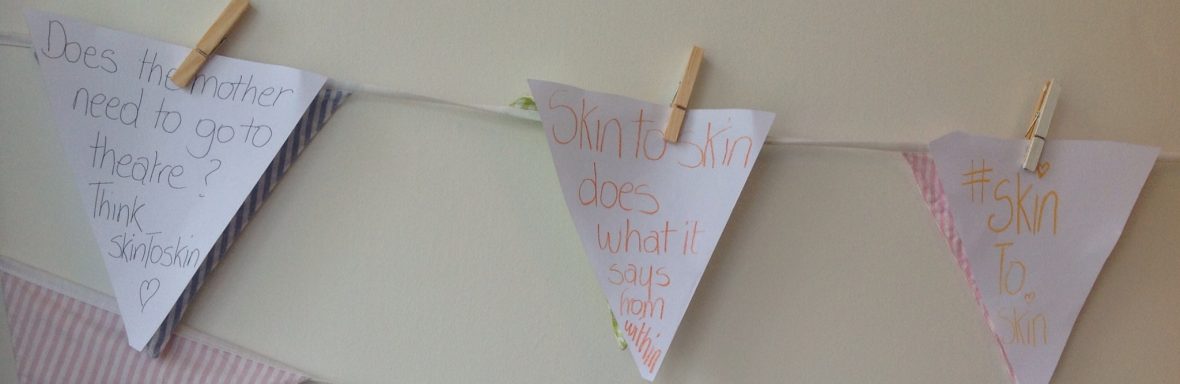
When a newborn is gently placed into skin to skin at birth with its mother complex intricate physiological and psychological processes begin. As midwives we must be mindful of the next stage and fight back the strange urge (that seems to be a part of our midwifery culture) to move the baby . 

Evidence shows that  if the baby is moved after any period of time before the first breastfeed then the whole process must begin again, it’s like restarting a stop watch. 

Patience and a detailed awareness about the physiology of breast feeding , mammalian responses ,the effects of intervention and why an early breastfeed will be an indicator of long term breast feeding success must be reinforced . The continually evolving fresh bank of ever expanding new research is gaining momentum. Emerging facts  about  ‘skin to skin contact’ such as it’s ability to reduce postpartum haemorrhage (this article can be read HERE ) , also the positive effect that skin to skin has on long term maternal mental health should be making us all sit up and think . If newborns experience skin to skin contact for long periods of time both at and post birth in combination with positive parenting the newborn will grow into a child and then an adult with an increased ability to socialise,  be compassionate and be kind. 

One thing stands like stone to me though and it is this 

Which mammal do we know that puts its trust in another mammal and then allows that other mammal  to take control of and/or disrupt the connection between the mother and the newborn ? 

I have had so many emails and messages from mothers, fathers  , future midwives , midwives , doctors ,peer support workers, friends  and family about ‘who owns the baby ?’ I feel the time has come for us all to challenge the constraints put upon us and to encourage women to shout out … 

 “this is my baby – I grew this baby I nurtured this child – I am the birth mother and I will not let anyone move my baby without my consent – I am part of the dyad and we work together – we two are one ” 

I would like to see more written about skin to skin wishes for birth if the situation becomes medicalised or complex – so that the other parent can have skin to skin contact . I would also like  other health care professionals  to consider whether they should be holding a baby without a reason. A family must also be fully informed and educated on the unseen detrimental effects of separation on the birth mother and the newborn . 

Can we honestly say that we inform future parents that if their newborn is moved out of skin to skin contact too soon that it will affect their baby’s ability to breastfeed and the mothers ability to lactate  ? Do we inform women that skin to skin contact gives a feel good factor ? 

Have we made birth a production line business ? For example how many times have you heard “is the woman in ‘Astra birth room’ ready for transfer to postnatal ward yet ?” Without the woman herself being asked ? Do we have a  constraint around time of birth to time of transfer to the ward ? Is it fair and equal that woman who give birth within a Midwifery Led Unit / Birth Centre can stay in the room they are in until they go home ? Whereas women who give birth on a labour ward are moved and then even separated from their partner in some hospitals ? 

These are all my thoughts and I am writing to provoke questions in my own practice as well as trying to help families and midwives . My skin to skin journey is an ongoing one and any feedback will be valued and appreciated 

Thank you for reading 

❤️Jenny ❤️ 

Birth, Courage, Kindness, Midwifery and birth, NHS, Teaching, Women's rights

Happy Birthday Sheena 

I feel like I have known Sheena all my life . However we have known each other less than two years

Our first exchange with one another was I twitter when she retweeted one of my very early tweets about midwifery . I ran around my house “Sheena Byrom has retweeted my tweet  !”

I have learnt so much from Sheena about tolerance and roaring – agreeing and challenging and about  the nature of kindness plus why as women we must raise each other up not pull each other down . 

At work last week a senior male obstetric consultant said to me

“Midwives are advocates for all women of the world”

his words immediately made me think of Sheena and the work she does .

 I think more than anything Sheena has helped me because she believed in me – nominating me to present at an NHS midwifery conference in Durham . Click HERE for the storify on it by @GreatNorthMum . I had previously only presented at the National Supervisor of Midwives Conference in 2006  . This amazing opportunity helped me to see that presenting at conferences is about networking and sharing good practice as well as learning from others . It’s about connecting and going forwards together – the social media side of conferences allows those unable  to attend to be there via a hashtag and to catch up through stories on Steller,  Storify and blogs. 

 Sheena has a global impact on so  many  women  around the world who are connected through her love of midwifery . She is also a staunch family person and adores socialising never too busy to say hello or send a message . 

I know I’m not alone in wishing Sheena a Happy Birthday and here’s a film by @GarethPresch CLICK HERE to watch with a poem I wrote to sum up The Sheena Effect 

Sheena there are so many families, women, midwives, future midwives in the  world who have so much to thank you for . 

Enjoy your birthday – and may you stay ❤️Forever Young ❤️

Lots of Love Jenny xxxx 

Being busy as a midwife, Birth, Courage, Kindness, Learning, NHS, Nursing, Teaching, Women's rights

Dashing here to where ? 

A few months ago I was on a break  with a #FutureMidwife – we were eating a meal at work . The staff room door flew open and a midwife in charge said “I need an observations machine in room 2 right now” the future midwife was up & out of the room before I had chance to think – err she is a lot younger than me : ) 

When she returned I said “did you go into automatic pilot ?” She agreed that she had so here’s what we discussed . 

1.When someone asks you for help ask why -is it an emergency?

2. Allow the process time to reach your brain 

3. If sitting stand up slowly to prepare yourself – if standing think before you start to walk 

4. Respect yourself and your mindfulness as much as the other person – you are equals 

5. Consider your age / fitness / mental well being and why you feel the need to dash 

6. Slow down – put yourself first – if you are young you have a long time to be working – probably into your 60s – each stressful situation shortens your life slightly 

7. If it’s an emergency it’s ok to go into autopilot but realise that you are a valuable so your focus and calm will lead others to be the same . 

Last week I almost bumped into a newly qualified midwife who was ruining out of a room . I said stop ! Are you ok what’s wrong ? “I have to tell shift leader how many cm’s dilated the woman I am with is ” I said “but that’s no emergency – you are 22 you have probably another 44 years to work . So if you continually dash you will eventually burn out . Leaving a room calmly will impact on yourself and the woman you are with – be mindful of yourself”  

The midwife agreed with me and I said don’t promise me – promise yourself to think first then walk – dash only in an emergency situation and running ? Should we be running ? Consider your own safety first . 

Here’s some points  for you all to consider 

Do you dash here & there not stopping to think ? 

Consider your mind and body – slow down a little – be calm – take your time . There are plenty of opportunities to speed up in emergency situations . Don’t put yourself under unnecessary stress if you don’t need to – there is an implication on your health . 

Try this for one day then one week and see how you feel – share your feelings with others , spread the word. 

Here’s my poem 

Dashing About 

When we dash out of a room -we leave no time to think

So thoughts are given less worth than deeds and this might make us sink 

Walk slowly as you think to yourself  and slow your pace right down

Be mindful of your own well being and you’ll never wear a frown x ❤️

Thankyou for reading 

Jenny ❤️ 

Being bullied, Courage, Kindness, Midwifery and birth, NHS, Nursing, Women's rights

Speak Out 

Please do not see me as anyone special – my philosophy is to learn and to inspire  others to keep going – against the odds. To help others and to reinforce within myself the understanding that feeling shame is ok , that to be embarrassed is fine and to feel vulnerable is to be human . I am reading Brene Browns book Rising Strong and now realise that it’s ok not to be strong all the time. I try to stay humble and kind. 
Just recently I’ve been reading a lot about hierarchy and what it means . Some say social media does not flatten hierarchy perhaps it doesn’t but it does connect you to people you may never find the time to meet or talk to in person . 

THIS WAS WRITTEN IN 2007 I have heard of stories about bullying in the NHS and I have been on the receiving end – the word bullying to me dehumanises the people who are actually carrying out the behaviour and cruelty they are ‘bullies ‘

In May 2015 Marie Claire Magazine published an article about nursing and the bullying culture CLICK HERE to read – it has many parallels to midwifery . Sadly this issue is talked about and highlighted as wrong but still it continues . 

Jacques Gerrard is   @JacqueGRCM on twitter – Jacques gives a powerful presentation on how bullying and undermining behaviour can affect someone’s work and be detrimental to a midwives’ health. Also Jacques promotes the  RCOG & RCM JOINT TOOLKIT on challenging and identifying bullying behaviour . 

Bullying can include questioning practice , being gossiped about , being marginalised, ostracised Forcing to retrain when not necessary and being  

 given an excessive or inappropriate workload . It can also include things like not being valued for the work you do , and not being supported . It takes immense strength to challenge bullies and to let them see that you are not affected by them when in fact you might be – this is displaying a strong exterior . a person  on the receiving end of bullying may develop mental illness and physical symptoms . The following are some of the effects of being bullied 

…. anxiety, headaches, nausea, ulcers, sleeplessness, skin rashes, irritable bowel syndrome, high blood pressure, tearfulness, loss of self-confidence, various illnesses of the organs such as the kidneys, thoughts of suicide…. 

People who are being bulliied  should be aware that their employer has a duty to protect them and make them safe . The Trade Inion Congress has solid advice on challenging and recognising bullying TRADE UNION CONGRESS – ADVICE TO HELP YOU IF YOU ARE BEING BULLIED –

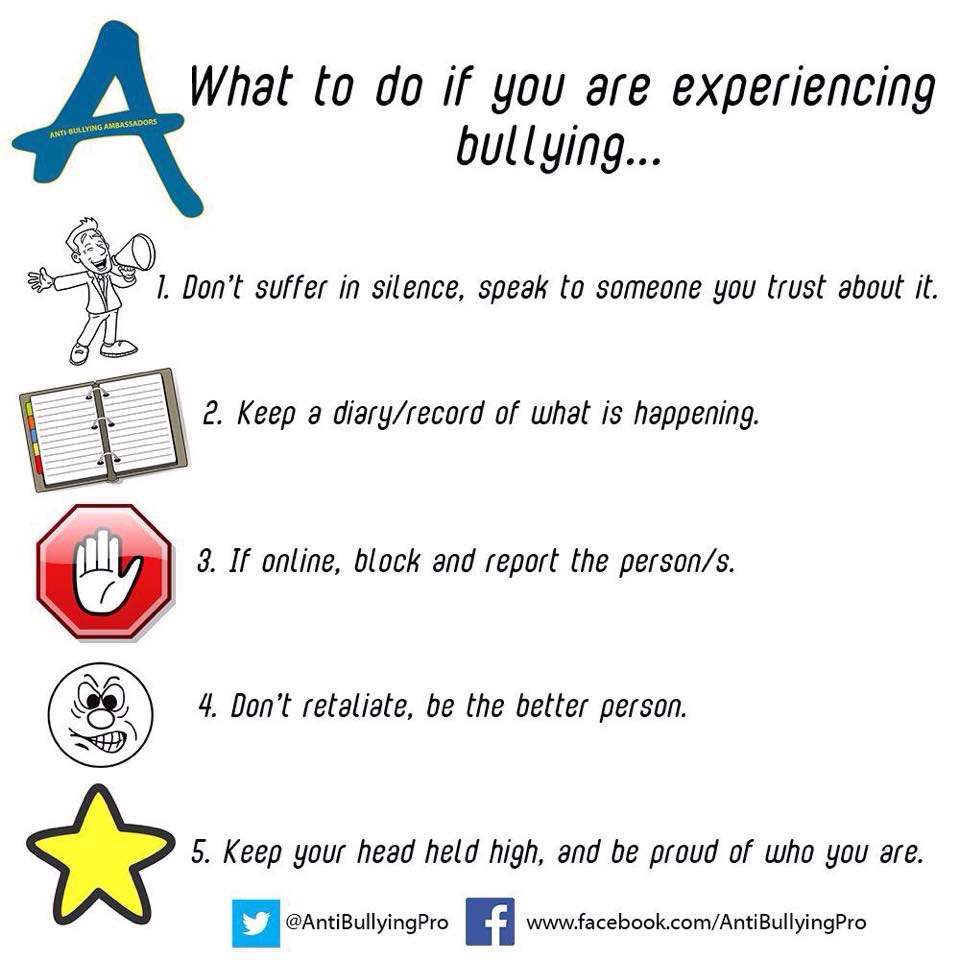
As today is #SpeakOut day against bullying I’ve been reading on this  ANTI-BULLYING WEBSITE how to train to become an anti-bullying ambassador and this training  involves school children and adults in schools, the workplace and the community . 

It’s time to challenge any form of bullying and to consider how we treat others . Do you value your colleagues or do you snipe about them ? Do you include them or leave them to flounder on unsupported and lonely .

Bullies make up about 20% of the workforce so we can out number them and challenge . Only two weeks ago I saw a fellow colleague blatantly being targeted and I did something about it . Don’t get me wrong it was hard to speak out but once I did I had feedback from others that they had gained courage to speak out . 

It’s time to address the bullies and help them to see that their actions and behaviours can have a  long term detrimental effect on A person , the whole of society and health . If you are beng bullied don’t be a victim speak out , seek advice tell your friends , keep a diary and get some support from your union representative . If you are not in a union join one . 

Let’s all be courageous and make the world a better place to be in 

Thank you for reading 

Jenny ❤️

Being busy as a midwife, Courage, Kindness, Learning, Midwifery and birth, Skin to skin contact, Teaching, Women's rights

If you are a midwife – I am just like you ❤️  

I am two people sometimes my identities merge into one sometimes they separate. First and foremost I am a mother who is a writer and expresses her work through writing, art  and social media. Then I am a midwife I work full time clinically and I do shift work. This realisation hit me after seeing the film ‘The Lady In The Van’ where Alan Bennett is portrayed by two actors  showing his two roles – one as the writer Alan Bennet and the other Alan Bennett the man with the house and life to live 

In addition to my NHS role  I also present regularly usually to NHS trusts Midwifery Societies and to other NHS Departments usually around skin to skin contact at birth – I also include discussion around  courage and challenges within the workplace .  Sometimes my  two ‘lives’ meet sometimes they go their separate ways however I am the conduit of my own story . I say this because I blog about some of the experiences I have had within my own work and also talk about them in my presentations . By using these experiences my aim is help others to gain confidence or consider their own approach to colleagues and to women. 

I reflect on each occurrence and then I depersonalise it to write in the third person – the aim of my stories is to give the reader hope for themselves and for others . I want midwives to realise that I am just like them – I get up I go to work I come home and then I work some more .  I work shifts and weekends . There are occasions when I have beans on toast or cereal for dinner and I have even been known to spend a full day in my pyjamas if I need a good rest . There are times on a shift when I may not get a break and / or go home late. 

I have had feedback that some of my blogs hit a nerve – my main passion is to promote skin to skin contact for all birth settings where possible , however if my platform enables me to speak out for others who are unable to speak out for themselves , then I will do it .  I would like to pose a question to you all – 

Are you aware of why some midwives do not rejoice in the work that other midwives do? 

Why is this ? As far as I am concerned it is stopping us from moving forwards as a profession. The midwives that do extra mural work are not trying to glorify themselves but they are simply filled with passion. Their drive is not something they find easy and they get tired and disheartened but they keep going – that does not mean they are any better, wiser or more respected than those doing their role and nothing extra – it just means they want to help the profession to be recognised and all of us to be equally valued. We are all relevant voices so try to respect one another and be professional , compassionate and kind to one another – this will then drip onto the women and families we care for . Consider how you react to a midwife who might be in the public eye and realise that you are equal partners in midwifery . 

Reflect back to your last month at work – have you been in any situation that you felt uncomfortable in ? Did you witness a colleague being upset? Did you see or hear something that concerned you ? How did you feel ? What did you do ? Did you regret not saying anything either because the time was not right or just because you felt scared? How do you think the other person felt ? Who did you talk to about it ? Your supervisor of midwives ? Your colleague ? Your manager ? Your family ? The NMC? Your union representative or steward? Your friends or no one ? It’s really important that when something emotional happens in your life that you can debrief about it . Personal or joint reflection helps us all to  gain feedback from ourselves  and from others and it’s SO important that this feedback includes positivity as well as critical analysis . Why ? There is a plethora of research available  ON FEEDBACK  including the article you’ve just read . Search google scholar for research and articles on how nurses and / or doctors reflect

Keeping a diary each day will help you to reflect back with better clarity – time moves fast and soon the next week is upon us – the incident or situation will pass you by . Unbeknown to you stressful situations,  scenarios , whether they are large or small will slowly and gradually affect your physical and mental health . Things like weight gain , anxiety and depression are directly  to linked to stress in the workplace and can impact negatively  on safety , staffing levels , good care and achievements  for midwifery . 

I suggest you buddy up with someone you trust , someone you can reflect with , plan with and rejoice with. Try to remember why you chose midwifery and the massive impact that your care will  have on a woman and her family . 

We all have the same dreams 

Thank you for reading please leave comments as this helps me to learn and reflect 

Jenny ❤️

Courage, Kindness, Learning, NHS, Teaching

Teaching and learning 

Let’s imagine you are being taught how to do something . How you learn this task / skill / procedure is totally dependent upon a combination of factors . 

1 The environment – it may be calm or chaotic – the temperature , lighting and atmosphere and the place itself will all impact on the outcome 

2. The people present and their attitudes , personalities and beliefs . Also their own knowledge can impact on your ability to teach / learn or take in new information . 

3. Your prior knowledge or experience . How you feel about teaching and / or your teacher . If you are the learner your current state of mind / fears / previous experiences and self awareness. 

4. What is being taught ? If it’s an intricate task this will require intense patience by the person doing the teaching towards the learner . The teachers ability to step back in time and recall their own self as the learner in the same situation . For example if you drive a car  try to imagine yourself learning to drive all over again . Re-live the feelings you had when you first took control of a car . Are you kind to new learner drivers on the road? 

5. Time – how much time is available ? Is it going to be a rushed process – or is there plenty of time ? 

6. Preparation – what is ready to teach the task or skill . Do others have roles within the task and are you ready to teach / learn – have you read around the subject 

7. Compassion – a compassionate teacher will allow a learner to gain more from them – than one who is harsh – a compassionate teacher will hold back negative emotions as much as possible and give praise and encouragement so that the learner relaxes. Positive affirmation will not only allow the learner  to grow but also the teacher . 

8. Consideration – thinking of how the learner may feel shows kindness and allows learning to take place . The learner must not assume a subservient role as he/she must value the importance of being a learner . 

9.Feedback – it’s no use doing all the above & not reflecting together about how both parties felt about the situation . Honesty with one another allows the learner and the teacher to grow and develop positively . 

10. Variety – a one off teaching session is not always the best thing , but it might be the the only opportunity . Its just as important to have a variety of teachers and reflect on how you learn from each of them as much as it is to have a variety of learners to see how you develop and adapt different styles of teaching . 

11. Equality -There should be no hierarchy in teaching and learning – both parities must feel equal and be respectful  towards each other’s needs and planned outcomes . 

Embrace teaching and learning – both are intertwined . They help us to develop and to make the world a better place . Never stop learning – value and share knowledge but also listen carefully to all voices – be kind to one another 

Thankyou for reading I

❤️Jenny ❤️ 

Courage, Kindness, NHS, Nursing

Listening and initiative 

Sometimes you may be told or asked to do something within your role at work . You have choices 

1.obey do as you are told 

2. Question why and discuss the options with the other person – you must  give sound évidence and / or explore feelings as to why you feel this way 

3. Decide against it – investigate the situation on your own and show initiative – keep safety and kindness as your prime outcomes  and aim 

Éveryone in every organisation should have a valid and listened to voice – sometimes others see things or situations that others might not be aware of . 

If you are the person being challenged take time to listen , appreciate that the other persons story is just as valid as yours . A senior role does not signify a reason to avoid being challenged . 

When the matter is resolved or not as the case may be – think carefully 

1. Is/Was either person showing initiative ? 

2. Did the challenge improve patient experience ? 

3. Did both parties feel equal in thoughts , voices and deeds ?

4. Was feedback positive or negative ? 

I have seen situations in my career where junior staff have challenged senior staff and been right but the matter has been brushed aside . In fact the junior team member was displaying leadership but due to the hierarchical view of the senior person no praise or feedback was given . 

This is a lost opportunity – to value a colleague to help them on their journey. Also to improve patient care .

When situations happen always look at the bigger picture . WHO is gaining ? WHO is losing out ? 

Are you developing leaders within your organisation or are you squashing them ? 

Listen to all voices matter how junior or senior – question in your own mind “would I ask that of myself ” evaluate feedback give praise and be thankful for initiative . 

Be a listening and compassionate leader 

Thank you for reading 

Jenny