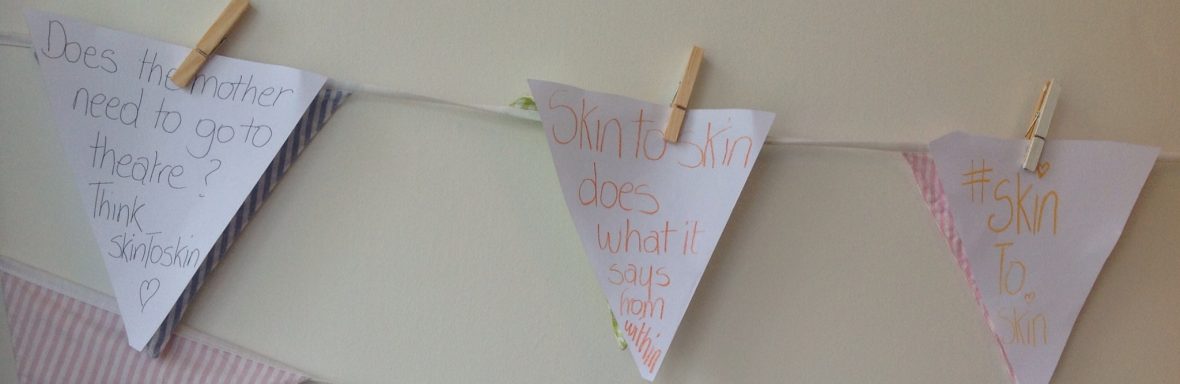
Change management, Compassion, Giving information, Helping others, Hospital, Kindness, MatExp, Midwife, Midwifery, Midwifery and birth, New parents, Newborn, NHS, NHS Systems and processes, Nursing, Obstetrics, Patient care, Respect, Smoking cessation, Women's health, Working from the heart

Sharing evidence in the NHS 

We’ve all been there – in a busy clinical area and a person or family  are advised there is a change in care due to clinical findings, investigations, laboratory results . Time is limited but each person being counselled varies in their knowledge, understanding, intelligence and how they process the facts that are  imparted to them. It can’t be a one size fits all but how exactly do health professionals communicate quality evidence to the people they care for and maintain an individualised approach? 

Several NHS trusts are going paperless with leaflets available on line. This is a way forward but we must ensure  there is access  to computer or a phone with wi-if access . Some health care users may not want to admit they are technophobic, don’t have a computer or laptop or perhaps cannot read and/or write. I promote the use of libraries and also show how to access the hospital free wi-fi . It’s important to flag the hospital wi-fi which should be available for all staff ,visitors and patients – Trusts that don’t provide this are failing their patients and staff . Access to wi-fi has been jokingly added to the Maslow triangle 
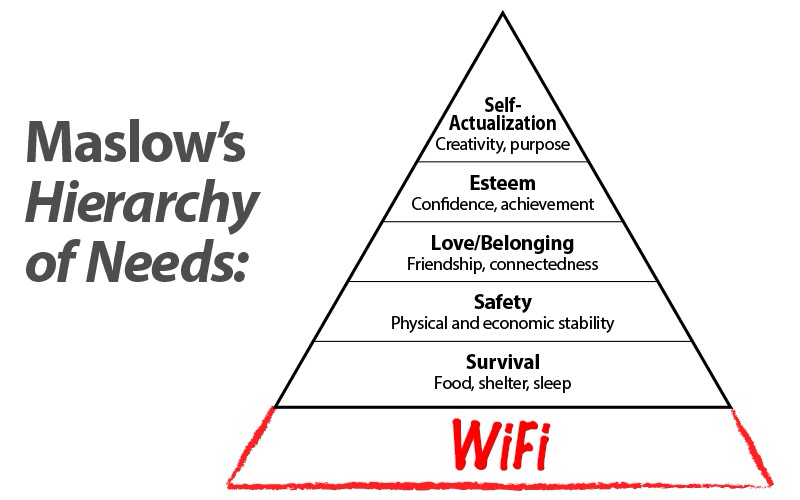
  

but on a serious note it’s standard in cafes, restaurants and hotels so please NHS follow suit – our business is hospitality after all . 

Questions to ask about giving information 

  • Is it relevant ?
  • Is it current ?
  • Does it link to evidence and research ?
  • Who decides how in depth it should be ? 

Giving a leaflet is simply  a starting point for a wider discussion it’s not a final statement . As health care professionals we should be constantly asking women and families “is there anything you need to know ? Any questions you have? ” as well as promoting a learning environment . We are helping women to become leaders for other women when we give valid , useful information out . There is no excuse for us to say  “I wasn’t asked” anymore. 

Health professionals must start the spark that gives the public a thirst for knowledge about their own health . I recently counselled a woman about carbon monoxide(CO) – she didn’t smoke but two of her close family members did . I offered them all Carbon Monoxide screening . The two family members CO levels were 1. Above 30 2. Above 25 . The non-smokers was 19 and wait for it I also measured my CO as a control – mine was 15 . I then realised I’d been in a closed room with the family for over an hour . The CO had affected all of us . This led to a discussion about the effects of smoking , the safety of nicotine but the dangerous effects of carbon monoxide and the way the tobacco industry makes an addictive product with hidden perils . The family chose smoking cessation as the results of the screening test surprised them (and me !)  I didn’t nag them I befriended them and helped them to focus on how they could remove the product from their lives and not their guilt . 

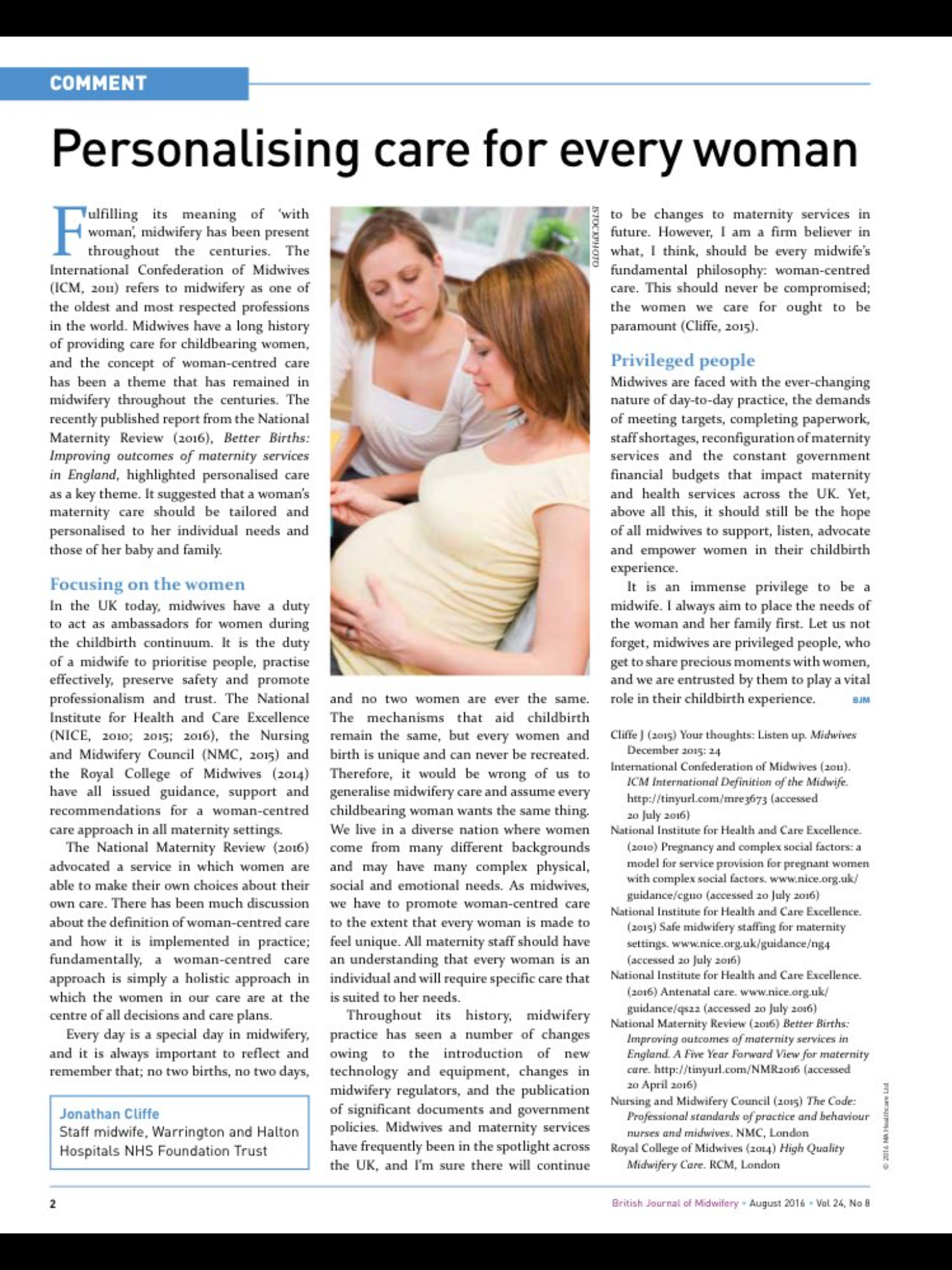
Below is a recent article by Jonathan Cliffe Midwife about personalising care for every woman – published in the British Journal ofMidwifery August 2016 . 
 

The current financial status of the NHS is forcing many  trusts  to cut back on small things, but I believe that it’s the small things that make the NHS wonderful. The fact of the matter is we are here to provide a priceless service to families, parents and people. If we keep our focus on doing the best we can do each and every day by imparting the evidence which applies to the individual , looking at how the individual might help us to gain new knowledge, opening our minds to  improving outcomes, valuing staff and patients alike  then the only way  that the NHS can possiblY move  is in a toward direction. 
I suggest you google “How to share evidence –  NHS”  you might find some valuable information to help your own NHS trust . 

Thank you for reading , please leave a comment .
With love , 

Jenny ❤️

NHS

Hospitality and the NHS

I met up with an old friend this week . ‘Naomi’ works in a hotel and was telling me about a module she’s just completed at University based on hospitality . I immediately started to see the connection in our jobs . I work in the NHS but my work is based on hospitality  . 

NHS staff meet strangers on most days of their days at work and it’s how we greet these strangers that sets the bar for the organisation that employs us . I was born and raised in Oldham and I tend to offer cups of tea and biscuits to start the relationship and of course ALWAYS  #HelloMyNameIs founded by the indomitable brave and courageous @GrangerKate . I usually go the extra mile as its in my nature to do this. I relish helping people but I can also read when some do not want help and that’s a useful skill .

Paying someone attention that you are caring for is not about flattery, it is about listening, looking, showing a genuine interest, displaying kindness and asking how you can help them . Have you ever noticed someone looking puzzled at a map of the hospital and realised that they might need help to find their destination? For we are are all on different journeys in our lives . We must be able to recognise body language and behaviour cues . For example, stress can cause people to become quiet or loud , sad or angry , fearful or over confident. 

Perhaps we subconsciously forget the true meaning of the word ‘hospital’ as it actually encompasses all who enter into it which includes relatives and friends of the person being welcomed and cared for . We are responsible for being hospitable towards them just as much.  Each point of contact is a window for others to see how we react , how we care and therefore to recommend us (or not as the case maybe) to their friends and relatives .   We must keep that window clean and shiny and make sure it keeps letting the sunlight in and that its remain transparent to the world outside. 

I googled “Are hospital hospitable?” after my lightbulb moment and found THIS BRILLIANT ARTICLE written in 2005 by Dr Peter McCann M.D.. In the last paragraph he summarises that hospitals should embrace “service in a caring environment” . 

The next time you tell someone that you work at a hospital consider its true meaning . This 8 letter word HOSPITAL is all about the staff who work in it and their job is to display genuine kindness towards others. 

Thank you for reading 

Please comment and share .

With love , 

Jenny ❤️

Against the odds, Care of the elderly, Change management, Community, Compassion, Courage, Discharge from hospital, Helping others, Hospital, Human kindness, Human rights, Kindness, Learning, Media, NHS, NHS Systems and processes, Patient care, Psychology, Respect, Surgery, Women's health, Women's rights

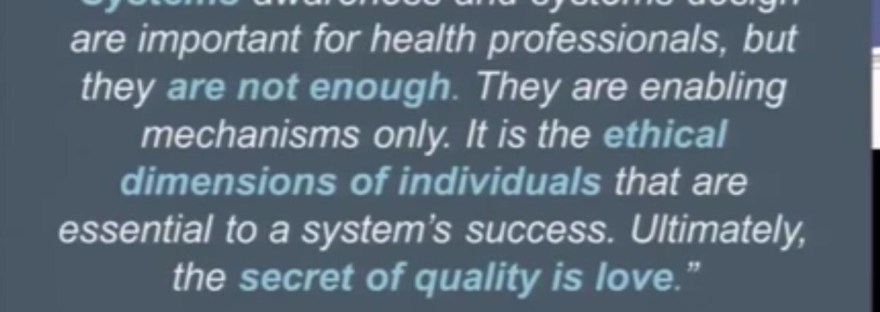
 The role of L❤️VE in healthcare 

I recently rewatched    THIS FILM   of Dr Donald Berwick giving the keynote speech in London 2013 to The International Forum on Quality and Safety in Healthcare. This presentation struck a chord with me . 

In the NHS there are many systems and processes which promote working within the confines of guidance and staffing  . However, time and time again there seems to be omissions about how guidance can encompass love . When people love their job and they feel valued within their particular role the result is better health care . It can’t be a coincidence that this is because if you love your job then in effect you love the people you care for .  

When we talk about “love” it’s sometimes misunderstood – actually being human is about loving others .

 I was once in an orthopaedic ward as a patient following an accident and had to have major surgery on my lower leg – a pin and plate and internal fixation , tendon repairs . This operation left me non-weight bearing for 12 weeks . My mobility was severely compromised . In the bed next to me was an elderly woman let’s call her “Sophie”. Each day I’d watch some staff forget to put Sophie’s drink within her reach and this troubled me greatly . I’d ask staff to move her drink closer and I was usually given ‘the look’ i.e “what business is it of yours?” In fact it was totally my business as a human to care about another human . So I made a decision that I’d make Sophie’s hydration my job and also the job of my visitors . Sophie had no visitors , she was confused and didn’t really talk much . I asked my family to bring her a few bottles of sugar free cordial and set about my mission . On a daily basis I hopped to her bed and made her several drinks over the course of the day – usually out of sight of the staff . I began to recognise when she wanted the toilet as she’d shout out , then I’d alert the staff . This went on over about 6 days and with my visitors helping Sophie was soon rehydrated and talking – in fact she was well enough to go back to the nursing home she had been admitted from . 

So what made me do this ? I didn’t know Sophie and I could’ve just focused on my own recovery. In fact Sophie helped me to find the courage to use my crutches (something I was petrified of using) and she took my mind off my own pain and frustration . Much more than this however I saw myself as Sophie in years to come – ‘sat out’ in a chair unable to move or communicate , hoping for the staff to be kind , for the kindness of strangers to aid my recovery or to ease my loneliness in some way . 

“We are all one another” 

I never told anyone about this before except my family who were also directly responsible for Sophie’s recovery . You see the truth is we didn’t do it for recognition – we de it because we are human 

Thank you for reading 

With love , Jenny ❤️

NHS

Interaction and infant mental health ❤️

So if the NHS takes on board my ideas for the form as explained in my blog link below  – please could we have some unity across trusts as I feel this will keep the message stronger for parents , foster families and most importantly children themselves as they are the future 🌎❤️

Here’s  the blog I wrote for Infant Mental Health Week for RCM website ….
CLICK AND READ HERE
Thank you Heart of England NHS trust for the tabard ❤️


Babies, Being busy as a midwife, Birth, Breastfeeding, Caesarean section, Care of the elderly, Change management, Children, Community care, Compassion, Courage, Helping others, Hospital, Human rights, Kindness, Labour and birth, Learning, Media, Midwife, Midwifery, Midwifery and birth, New parents, Newborn, Newborn attachment, NHS, NHS Systems and processes, Nursing, Obstetrics, Patient care, Respect, Surgery, Teaching, Women's health, Young mothers, Young women

#LeadToAdd 

LeadToAdd click HERE to learn more is the latest NHS England campaign # is #LeadToAdd. As a Caremaker I will be linking this on Twitter with my work on #skinToskin , #futuremidwives and #couragebutter to inspire others to see themselves as leaders regardless of their role . Patients, women, families and non-clinical staff are also leaders .  
I feel this will inspire/activate different meanings to different people

Here are some of my thoughts around it

What does to lead mean ? 
To take charge , to be at the front , to inspire , to educate, to be diverse 
Leading is about being at the front and CONSTANTLY looking back to bring others with you

Leading is about being the first to begin something but not necessarily holding onto that but looking at how your actions impact on the way others fulfil their role. Leading is being a positive role model, leading is about looking inwards at your own behaviour and also looking outwards at the behaviour of others . 

In the NHS all staff need encouragement to recognise themselves as leaders and also to see that some behaviours do not embody leadership. We are all learning each day, so don’t stay still – question yourself and the way you speak to others . Ask a colleague to listen to you talking to patients and staff and to give you feedback -what could you change ? Integrate telephone conversations into drills training-  talk to your practice development team – think outside the box . 

Someone who leads others into poor practice is a poor leader but a leader non the less so be aware of your own commitment to pass the positive leadership baton . We are human and it’s ok to make mistakes , however we must learn, evolve and change .

The other day I had a car journey with Joan Pons Laplana (@ThebestJoan on twitter) and once again he made me think hard about how the 6Cs are integrated into practice . Joan said to me that as a health care professional all tasks and procedures must embody the 6Cs – even answering a telephone call. 
As a form of reflection I’d like you to read passage one and then passage two
Passage One 
Busy labour ward – phone ringing , midwife answered the phone – we will call the person making the call Tony and his partner who is having a baby is called Dolores. The midwives name will be Darcy . 
Midwife ( confident and cheery) ” hello labour ward , midwife speaking how can I help you?”
Tony (nervous voice) ” oh hi – err my partner thinks she’s in labour , it’s our first baby and we are a bit nervous . Could I ask you some questions , she’s here but having a contraction right now and then she feels sick for a few minutes after its gone. 
Midwife “oh right well I need to talk to her please and decide what’s happening’  
I’m not going to continue this but could the midwife change her approach ? Is this midwife you ? A colleague? This approach has been learnt from a peer
Passage Two 

Busy labour ward – phone ringing , midwife answered the phone – we will call the person making the call Tony and his partner who is having a baby is called Dolores. The midwives name will be Darcy . ….

Midwife ( confident and cheery) ” hello labour ward , my name is Darcy Jones I’m a midwife and how can I help you?”
Tony (nervous voice) ” oh hi Darcy – I’m Tony – err my partner Dolores thinks she’s in labour , it’s our first baby and we are a bit nervous . Could I ask you some questions , she’s here but having a contraction right now and then she feels sick for a few minutes after its gone. 
Midwife “ok well I would like to take some details first whilst Dolores has a contraction . Thank you so much for ringing us . How are you feeling ? This is your first baby ? How exciting for you both!” 
I’m not going to continue this but could the midwife change her approach In either scenario – which is the best one in your opinion ?  ? Is either of these scenarios you ? A colleague? This approach has been learnt from a peer. 
So you see two examples each one leaving the person contacting  the service with different emotions . 
Start your journey as a #LeadToAdd leader today  ❤️
Thank you for reading 
Love , Jenny ❤️

Antenatal education, Babies, Being busy as a midwife, Birth, Breastfeeding, Caesarean section, Change management, Children, Compassion, Courage, Helping others, Hospital, Human rights, Intra-operative care, Kindness, Labour and birth, Learning, Manual removal of the placenta, MatExp, Media, Midwife, Midwifery, Midwifery and birth, New parents, Newborn, Newborn attachment, NHS, NHS Systems and processes, Obstetrics, Patient care, Post traumatic stress disorder, Postnatal care, Respect, Skin to skin contact, Surgery, Teaching, Women's health, Women's rights, Young mothers, Young women

The natural caesarean / the gentle caesarean 

There’s a debate on Twitter this morning about the ‘natural caesarean’ as a term that promotes a positive experience of birth by caesarean. I don’t agree with the term and I think as health care professionals working in the area of birth we should ensure that every birth is a positive birth . Milli Hill started the The Positive Birth Movement  with this goal in mind (@birthpositive on Twitter ) 

Bearing this in mind I’d like to ask the following questions for you to consider and share with with your colleagues, family , friends , midwives and obstetricians . 
1. How many women who have an emergency caeserean and/or instrumental birth (forceps or ventouse) are given information in the antenatal period about the far reaching health and psychological benefits of skin to skin contact in this setting to both mother and baby ? 

2. Compare the above with how many women are given information about  skin to skin contact around normal birth ? 

3. Compare both to how many woman are informed that skin to skin is possible during manual removal of placenta and repair of any perineal trauma in the theatre setting ? 

4. Are women informed 

  • They can TELL midwives to defer the weighing of their newborn in order to enjoy the benefits of prolonged skin to skin contact 
  • That they should never be separated from their baby unless a clinical situation becomes apparent or they themselves choose not to have skin to skin contact despite being FULLY informed
  • That their baby could ‘self latch’ at the breast without any handling by staff and also correct its own acidosis and stabilise its own breathing because of skin to skin contact ? 
  • That skin to skin and early breastfeeding “Pronurturance ” is linked to a reduction in the incidence of  postpartum haemorrhage?  CLICK RIGHT HERE for the Pronurturance paper 
  • That if babies could talk they would choose skin to skin contact despite their birth environment 
  • That skin to skin contact is the building block for a persons social and psychological development 

The midwives and staff on social media who talk about caesarean are not promoters of it , they are giving women information about choice – so that if the operation (which is major surgery) does take place then these women are able to not only enjoy their birth experience but give their relationship with their baby the best possible start . 

I suppose it’s similar to the question “does having a teenage pregnancy strategy increase teenage pregnancy rates ?  (and I much prefer the term  “young women”to ‘teenage pregnancy’) 

Does having full information about your choices if you do go on to have a caeserean increase caesarean rates ? I don’t know the answer to either of these questions but I do know that the women I have assisted and sometimes fought for to have skin to skin contact with their newborns in different birth situations have all told me this 

 
-that they never realised the positive impact it had on them as a successful mother

To me this is enough .   
Thank you for reading 

With love , Jenny ❤️

I am also promoting #MatExp as a platform which enables and encourages discussion between women, families and health care professionals . 

Bereavement, Courage, Grieving, Human rights, Kindness, Learning, Media, NHS, Post traumatic stress disorder, Respect, Women's rights

Aiming and succeeding – the journey of others  

Today I’ve been reading a lot on the Internet and twitter about “The Secret” which is a dramatisation of real events that took place in Northern Ireland in 1991  -a tragedy that totally disrupted and still continues to affect the families of the victims . 

The courageous daughter of Lesley Howell (Lauren Bradford) tried her best to stop a programme going ahead . This programme has been advertised and aired on ITV as a “drama”. The drama is based on a tragic event that tore through the hearts of the families involved as well as their respective families and their friends . Lauren decided to make her own voice as well as others heard and wrote an outstanding, impactful letter to The Guardian about why she disagreed with the “drama” and the unforeseen effect of it being on aired on TV  would cause . The letter is  HERE

I feel that Lauren has written this letter to ROAR for her own mother  Lesley , a wonderful, strong, kind   and giving mother. Lesley’s voice was silenced by murder and so she cannot speak for herself about her life or how much her treasured children meant to her . Much more than this however Lauren has given other victims the chance to see that they too CAN  and MUST  speak out   – so in writing her wonderful letter she will have helped others to realise that their voices WILL  be heard . The media must no longer hold the power of ‘story telling the lives of others’  in order to make money or gain viewers or readers, they must realise that they don’t know the story so therefore it will never belong to them -it’s not their story after all is it?

Speaking out as a victim must be very difficult – which newspaper does a victim approach ?  Which TV company ? How does a victim ensure that their views enable others to empathise with their true story? Here’s how – be like Lauren   – write with truth and dignity in your heart. 

I am so immensely proud of Lauren  because through her words and thoughts she is actually helping others who may not be able to speak out to also have their voices heard . In addition to this Lauren is encouraging us all to think differently about how cases are reported and written about . How can it be right that a person can actually make money from someone else’s tragedy ? 

Thank you for reading and please leave your thoughts and comments on Lauren’s article . This will to help the media see there are two sides to every story .
❤️Jenny❤️

Hospital, NHS, NHS Systems and processes, Patient care, Women's rights

Tales of my aunt 

I have been spending time with my auntie Anne (my dads sister)  . She’s over 100 years old and very strong willed , positive, agile, intelligent  and bright . As I’ve got older I always connected more with my mums sister and her husband Auntie Hilda and Uncle Bill) and they were always delighted to see me . Sadly my dear Uncle Bill  died last year after years of missing my late Auntie Hilda – I was heartbroken but I have happy memories of making wooden hearts with home on his jig saw machine and  long conversations on my mobile phone from his landline when he’d ring me and chat . He used to press coins into my children’s hands and say “buy yourself something , your mum needs money for food and your home” 

My younger sister clicked more with my Auntie Anne. Despite this I’ve always loved my Auntie Anne it’s just that we don’t realise the way that time passes . One day we are wondering what job to do and the next it’s time to think about a retirement plan . We miss seeing others and spending time with them whilst we are busy planning our futures . 

Back to my story – around  Easter time my Auntie had a fall and broke part of her pelvis (the superior rami to be exact) . I had to help so I offered my support to her daughter Judi and went to stay for a couple of nights so that Judi could go home  . 

Whilst I was there I learnt a lot about my late father and the tricks he’d get up to . It turns out he was a bit of a rebel . He kept mice in the coal shed and use to take two into school with him up his sleeve. At the age of eleven he cycled to Scotland with some friends because he’d always wanted to go there . I then learnt about other things – my dad Ralph worked  as a car mechanic and was badly electrocuted an accident which led to him developing a pleural effusion . He was sent to a Strinesdale Sanitorium as part of his recovery . I googled this place and found a diary which may gave me a small insight into his week’s spent there click HERE to read (bear in mind this was years before the NHS was established)

Anyway back to my auntie … 

My Auntie was sent home with greatly reduced mobility , the hospital in Manchester did not provide an ambulance and she had to crawl up hard concrete  steps to get to her flat .  Once inside she must have felt utter relief . She was with her daughter and my sister . My auntie told me that she hated being in hospital , that staff were not visible , that times had changed and she was glad to be home despite pain and worry about how she would recover more now because she was HOME.  The staff had even argued with her about her medication and what time she should take it . 

What strikes me about this true story is that my auntie does not complain lightly her mantra is and always has been “you’ve just got to get on with it ” . My Auntie is not soft , but she is human . I would like to know how discharge planning is ” we need your bed by 6pm and we can’t get hold of your daughter”

The decision to send my auntie home  was a rushed decision without discharge planning , thought for her amazing daughter and a total lack of insight . The discharge process should have started in collaboration with my Auntie as soon as she was admitted  – it didn’t . Strangely though I am glad for my auntie because she is recovering and she is safe . What about the other elderly people sent home like this with no family or friends to help them ?  My auntie is still waiting to see a physio , when my cousin rang  the GP the other day he said “I am NOT speaking  to YOU!” 

Let’s move onto to ‘carers’ . For six weeks my auntie is ‘entitled’ to support from carers in the enablement team . They assess DAILY whether my Auntie is improving . My argument with this approach is that there needs to be time for recovery to take place. This is a catch 22 position – here’s why 

1. Assessment cannot be during recovery – for example a midwife cannot assess the mobility of a woman immediately  post caesarean – it has to be done over time , using analgesia and when the woman is safe to mobilise . There must be clear information and evidence given to explain why post-op mobility is important but staged . Recovery is a human process and as each human is different so must each recovery be individualised according to age , pain , psychology , support and  love . 

2. Telling someone you are there to watch their progress is a watching role  so why not  call carers  who are employed to observe  and not give care “Watchers” 

3. The carers or the “watchers ” told me and my cousin ( we shared stories and reflected ) that by being there we were affecting their ability to assess my auntie . So I said to them “so do you think that to make your job easier either Judi or I or whoever is with my auntie is going to walk out and stay out so that  she can struggle the others hours that you don’t come ?”  My question is did the carers see our presence as an inconvenience to them not a benefit to my Auntie ?  

One particular carer came into my aunties flat did not say hello to my auntie and then said  “are WE getting dressed ?” To which my auntie replied “no WE are not ” ( I giggled ) 

Another day a carer came in hugged my auntie and they had a lovely conversation about eye conditions and I saw the light shine from her heart into my Aunties sparkling eyes . They connected and I could see and feel their mutual respect . A much nicer experience for my auntie than the day before when another carer striped my auntie off (apart from her knickers) and sat her on the loo and left her  to get on with a wash unaided . No cover or towel – I walked into to the bathroom covered my auntie and said “would you like me to wash your back  Auntie ?” Bear in mind I have never seen my auntie naked before. Was this carer respecting my aunties decency and dignity ? When the carer (watcher ) heard me she walked into the bathroom and said “I was just coming to do that ! SHE (meaning my auntie ) needs to get one of those back washers on a stick ” 
So I’m writing to the trust involved (in Manchester )  and I’m also adding that there must be some sort of regulation for carers . My aunties “carers and watchers” team  are not NHS – they are an agency with a contract -aye  there lies the rub . I must add that there ate two women in this team that  that stand out   head shoulders  and ❤️hearts❤️  above the rest . They told me that they don’t fit in because they love their job – now there’s food for thought . I’m glad the agency don’t allow theses two women to work together as that way they will reach more people with their kindness care and compassion . 

This blog is simply to help those involved in discharge planning for the elderly . It’s to help you  learn from patients and  relatives . Also it’s to try and identify where the communication and compassion  gaps are and how we  can do our best to try and fix them 
Thank you for reading 
❤️Jenny❤️

Charity, Children, Community, Gifts, Helping others, Kindness, NHS

✨My chosen charity – Barnardos✨

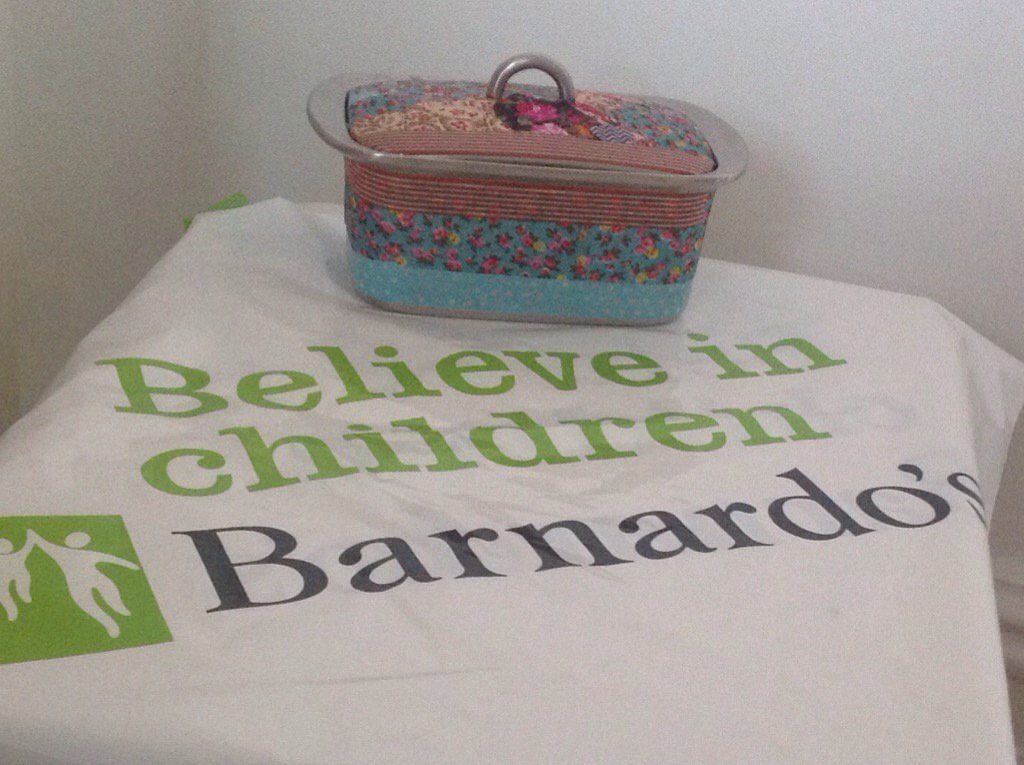
This year I have been sorting through things that I no longer need, things that could be useful to others and donating them to my local Barnardos shop . A couple of weeks ago I was in the shop and I had a look around  realising that as well as donating I should be actually buying something to support this worthwhile charity . I spent £4.57 on two CDS , a candle , a model of a fisherman, (as I have a thing for the sea ) and a butter dish which I have decorated here is my tweet CLICK HERE to see the tweet. 


When I arrived home I started  thinking about the gifts we buy others and thought of the way the media portrays wealth and indeed how some see the need to show their wealth by displaying their possessions to the world . Some obscene purchases of the wealthy really irritate me when I see how many people live in poverty not just in underdeveloped countries but also in developed countries like right here in the good old UK .  One example that recently made me question the true value of wealth was the story of Kim Kardashians nappy bag – A bag worth over  £10k . Imagine living in poverty & seeing this kind of story splashed over the news most days , and the effect on a humans resilience to keep going . Wealth means more than actually having enough to live on – wealth is about learning , kindness, humanity , giving to others , realising there is only so much you can  own and also sharing with others . I feel rich every day because of the family & friends that I have . They give me gifts that are not tangible but yet make me feel like a rich woman . 

I enjoy some quiz shows and relish learning. Whilst I watching the Charity donation segments on some “celebrity versions” of well known quiz show,  I was struck by a thought

 “if celebrities can have a chosen charity then why can’t normal people like me?” 

 I then researched some charities and chose Barnardos because it is so much more than a charity it has actions and outcomes and this year is celebrating its 150th year . Click HERE to read more about the history of Barnardos, listen to children’s voices and experience the impact that the work of Barnatdos is having on so many lives .  

This year until the end of 2016 I am making Barnardos my chosen charity and I pledge to do the following 

  • Donate anything I no longer need to Barnardos 
  • Purchase all future birthday presents and Christmas presents until the end of the year from my local Barnardos shop as far as possible . If this is not possible I will go to the nearest Barnardos shop after this one 
  • If I need to buy anything for myself or my home I will always first look for it in my local Barnatdos shop before going to a mainstream retailer. 
  • I will tweet my purchases to prove to others that I am staying true to my pledge 

I challenge you all to find a chosen charity of your own to support for the rest of the year and to help you feel like you are making a difference . 

As Ghandhi said  “Be the change you wish to see in the world ” 

Thank you Barnardos from me for all the children in the UK whose lives you have touched and changed 

Thank you for reading 

❤️Jenny❤️

Midwifery and birth, NHS

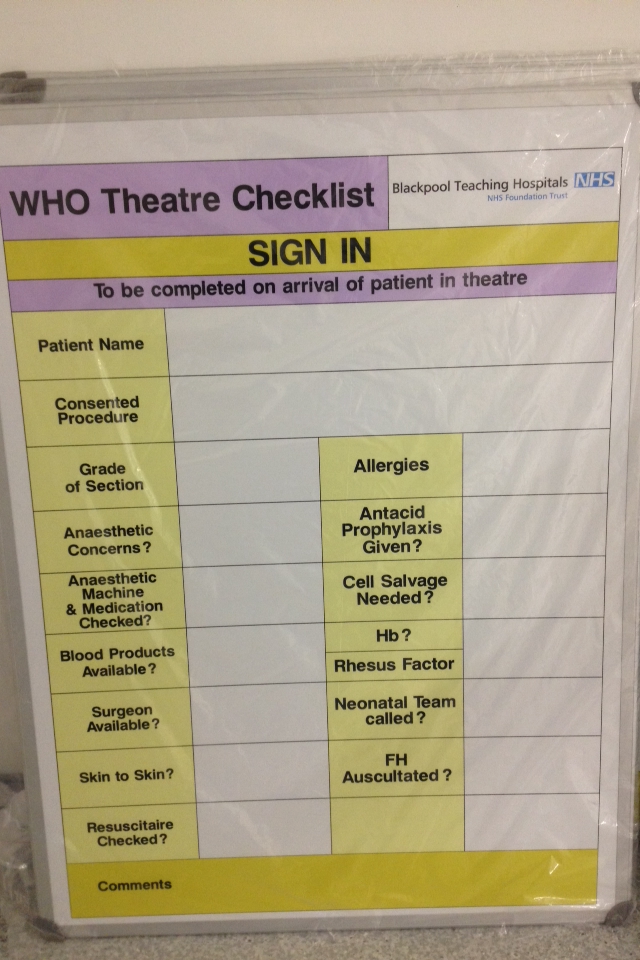
Skin to skin and the WHO checklist board

The day has arrived – several large cardboard flat packs were delivered to the Women’s Unit Theatre today and I could not wait to open them ALL – lucky for me Nick (a Consultant Anaesthetist) who totally ‘gets’ my passion for skin to skin was there .
“Nick” I said “if those boards don’t have skin to skin on them I’m going to have a huge tantrum and I don’t do tantrums”
“lets get them opened then Jenny” he replied
The first ones were “checkout boards ” which are to ensure that everything is correct prior to the woman leaving theatre –
“let’s try these Jenny ” bear in mind these are huge boards about 2-3 metres by 1.5 metres and very heavy – a theatre nurse joined us to help –
“you and your skin to skin you certainly have a passion for it don’t you ?” Mark (an ODP who was tidying up in the pre-op area) commented

Inside I was overwhelmed – not because of the actual board but because of the effect that seeing the actual words would have on a woman and the staff in theatre – I felt that women , midwives and theatre staff would now feel courageous about skin to skin in theatre , ask about it more and that our board might inspire other NHS Trusts . I get lots of private messages on Twitter asking me to help improve skin to skin in theatre and I believe that a positive change in one Trust can spread like a flame through the NHS

Skin to skin is not about @JennyTheM it is about women wanting to hold their newborns that they have nurtured and grown inside their bodies it is about feminism , valuing a woman’s role as a mother and it’s about love – it’s also about quality care , safety , compassion and making a difference as well as the immense health benefits that close contact can bring to both members of the dyad.

The second lot of boxes were moved to the front – Nick opened the top we peered in “can you see skin to skin Nick?” –
he replied “yes Jenny look !!!”
I peeped inside and sure enough there it was …..

‘skin to skin?’ …..they’d even remembered the question mark ! That was crucial as it had to be about reminding , choice and also rhetoric – I hugged Nick and he looked quite shocked – this was just the start and I’d gone through so much with all the staff to get to this point – I was so excited I couldn’t stop smiling – just you wait until those board are on the wall – writing on the wall was well worth it – 20141021-225150.jpgIMG_3870.PNG