NHS

Why blog ? Why not? 

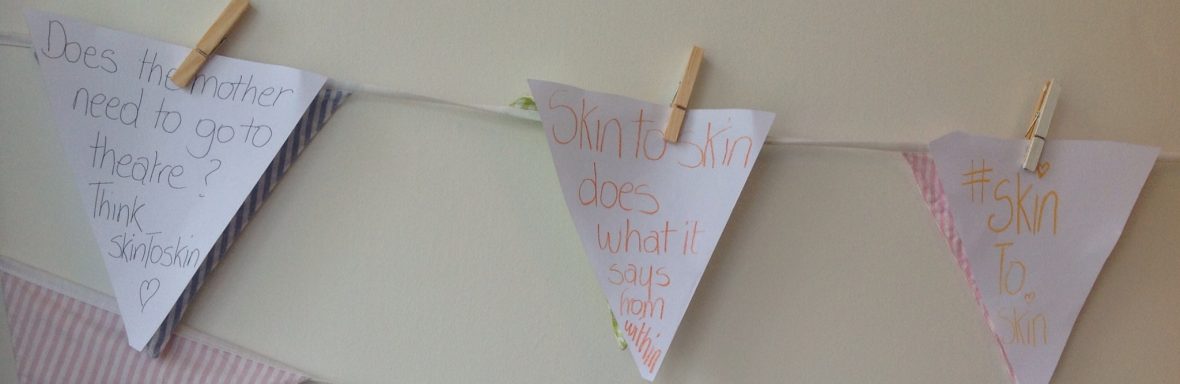
In February 2014 I made a conscious decision to start blogging . I did this primarily to spread the word about skin to skin contact for women who give birth in the operating theatre .

At this point I did not consider that I would gain in a positive emotional sense from writing a blog . Nor did I envisage that I would connect with other ‘bloggers’  or have my blog featured in  Teresa Chinn’s chapter  “Roar Behind The Silence” edited by Sheena Byrom and Soo Downe (about why kindness care & compassion matter in maternity services) 

My blog helps me to reflect on my working day , contemplate midwifery/maternity services , talk about the NHS and it enables me to voice my own feelings by “speaking” to others – ‘others’ who are free to choose whether or not they read my blog . I write each entry without a plan – I simply sit on my sofa , contemplate my own thoughts and start to write . Blogging will also go towards my own Revalidation with the NMC click  Here  for more information 

My blog on Courage Butter Courage Butter (a term which Tony Longbone thought of – thankyou Tony)   was spotted by Jane Cummings Chief Nurse and led to a co-published article with Jane to help health professionals consider their own courage within the NHS workplace . 

I suppose what I’m trying to say is blogging gives me a voice and also teaches me about myself . People like Sheena Byrom , John Walsh , Dr Alison Barrett, Leigh Kendall  , Annie Cooper, Gill Phillips, Emma Jane Sasaru, Dr Kate Granger, Natalie Corden , Anthony Longbone , Teresa Chinn , Helen Calvert and lots of others. These people all help me to develop and feel inspired not only in the way that I write , but how I see others. Writing also helps me to contemplate the workings of the NHS and change management . 

Blogging is my release , it’s my shout  or my whisper , it’s my cup of tea at the end of my day. Writing a blog helps to clear my mind and helps me to move forwards within my role as a NHS Midwife 

So my advice to you is to read some blogs , think about writing your own – start with a “blogshot” which is a screen shot of thoughts tweeted as a picture – you might be surprised at how much it will help you and others . 

Thankyou for reading 

❤️ Jenny ❤️

NHS

Change #JustDoItJuly #MatExp

How do we effect change ? Why do we want change ? 

Life is change , we are born we grow we learn we change 

By standing still and failing to embrace change we will experience the world rushing  on by – we are left behind trying to reach out and catch up with everything that we have missed  . 

Let’s rewind to the days of old when I started my career in the NHS …… 

The ward sister instructs me to pull the curtains around each bed on the nightingale ward . This is in preparation for the consultants ward round . No visitors , silence , even the patients who are not under the care of this consultant must be on their beds . The beds are all exactly the same , the lockers are devoid of any personal touch and the nurses walk with the procession of doctors – I am one of these nurses and there is fear in my heart – I dare not speak out – the consultant throws a set of case notes into the air in anger . He is annoyed by the way the notes have been filed – I stoop to pick the papers up – no one speaks – I feel so angry inside that such an influential person could put an object before the priority of a patient . I feel myself wondering how I will behave once I qualify as a nurse . 

Fast forward to the 21st century – the ward round is more relaxed Drs chat to staff about the weather , there is equality , everyone’s voice is heard including the people who are being seen , the women, the men – even families present during the ward round . 

Change in the NHS must keep happening

staff must evolve in order that the care they give to patients is based on research and evidence – not just their own opinion.

Inconsistent advice must be questioned in order that communication improves for everyone – the positive effects of a human approach should be shouted out from the rooftops so that warmth and kindness can spread like the warmth of the sun after the rain. 

We are human – we are only here for a short time – so in that time lets keep changing and let’s embrace change with a happy heart – question processes that have stood still for a while – don’t accept “That’s the way we have always done it ”  Instead look at it like this “Change is good change is now & change is the future ” 

Consider your action for change – my action for “Just DO it July” is to stop weighing babies within the first two hours of life – unless there is a valid indication  – for babies and women this will mean more skin to skin time and an increase in the success of an early breastfeed 

What’s your change going to be ? 

Midwifery and birth, NHS

Helping one another – and washing feet 👣

As a midwife I try to be amenable to others within my place of work 

I see helping others as offering help , making a cup of tea for them, checking they have had a break and making sure they are going home on time, sometimes staying behind to help them . Helping and supporting also means recognising when someone seems a bit stressed or not their usual self . This may manifest in the way they speak or a lack of interaction – we as midwives should be teaching future midwives how to recognise body language and verbal cues from co-workers as this will help us recognise the same in the women we care for . 

Asking someone “are you ok now?” As you walk out of a room away from them does not help them to reply or interact – it is your opinion and in fact rhetorical – if you are leaving them with significant work to complete so that you can return to something less important you should consider whether your action or inaction is in fact “teamwork” or “colleague centred support” as I call it 

We also need to consider that leaving  a woman in labour in a room or a woman who is just starting her first breastfeed is in fact not teamwork either – the woman and family  are also part of the team 

What I’m trying to say is help one another – it’s a good feeling to complete notes with a colleague for the good of the woman . The midwife you’re helping will have more time to be “with woman” . Care is not just physical it’s emotional , psychological and care is record keeping , cleaning , preparing a new space for the family – it’s making toast , hugging a colleague and care is a way we show love kindness & compassion to others 

So the next time you go into a room to answer a buzzer for a woman or a midwife who is with women don’t presume in your mind “they’re ok now ” and walk away look at the full picture – ask with direct eye contact “how else can I help you my friends?” Enter into the room take stock of the situation and use positive body language and a happy face 

The next time you arrive to your shift make sure the person you are taking over from knows you are there to relieve her at the end of her shift – be helpful “I can finish that ” give the other midwife  your full attention and let the family see your kind heart. 

If we give and display consideration to others each and every day we can only make things better within the NHS 

The other day I met a women who was very stressed and she had been in hospital unable to have a proper wash (by this I mean bath or shower ) for three days – I remembered my nurse tutor Mrs Valentines words from 1980 when I started my nursing “cleanliness is an intrinsic part of physical & mental well being” so I asked the woman if she would like to wash her feet – she was thrilled and in fact I washed her feet – she opened up to me about her stress and said it calmed het down & she relaxed for the first time for days . I HAD made time to do this – it took 15 minutes – the discussion we had also helped the Drs to understand more about her condition. The woman also laughed when a Dr came in to see me kneeling on the floor drying the woman’s feet. She said it was the first time she’d laughed for days – it was SO worth it . 

I’m not too proud to wash someone’s feet – I’ve been in the NHS over 35 years and know that this act is not just about the ‘feet’it’s about getting to know the woman I am caring for – so symbolically it’s important that we all wash each other’s feet on a regular basis be kind to colleagues be kind to women be kind to families 

Thank you for reading 

Jenny ❤️

NHS

Skin to Skin “Declined” 


  • When a woman gives birth and the birth is complicated , skin to skin contact can help her to re-centre on the beautiful relationship with her baby/babies. The way that midwives discuss skin to skin can and does have an impact on a woman’s decision – evidence shows that skin to skin contact at birth by ceasarean section is rising every day and I’d like to argue that it is not an ‘offer’ to be taken up or not – SKIN to SKIN is indeed a human right . 
  • Declining something means that the choice to “not accept” has been fully explained -I.E the effects of NOT having  skin skin contact have been fully explained as much as the effects of HAVING skin to skin contact  
  • Asking a woman if she “wants” skin to skin is not an invite or a request – it is one of the rights of a newborn and a mother  

Recently I met a woman who has post traumatic stress disorder relating to her first birth . She has inspired me to write this blog and I am so glad that I met her . Whilst she was receiving support for her birth trauma she requested to see her notes and was horrified to read “Offered SKIN to SKIN contact with newborn – same declined” this was several years ago and this woman tells me that she still remembers how she felt when she read those words for the first time “like a bad mother” 

So what am I tying to say ? 

  • Be careful how you phrase a question – put your heart and soul and kindness into it
  • Be gentle with women – if you say “if you hold your baby close  I will help you & stay nearby – you will probably adore skin to skin contact and if you don’t dad / second mum could do it instead 
  • Please don’t use the word DECLINED 

Informed consent means to discuss the pros and cons of all interventions and non interventions . Discussing the Atain Study by NHS Improvement with women who are giving birth to term infants and in particular by caesarean birth as these babies are over represented in the study is something that should be mentioned at EVERY contact – be that booking , antenatal appointment, antenatal education groups , attendance at hospital appointment , investigation appointmentby informing families about how SkinToSkin can reduce the chance of maternal infant separation we are sharing evidence and therefore impacting positively on relationships , long term mental health and breastfeeding .

Thank you for reading – Jenny ❤️

Midwifery and birth, NHS

❤️Facilitating #SkinToskin- which midwife/nurse/operating theatre worker are you ? ❤️

In the past two days I’ve had several direct  messages on twitter – all connected and concerned with facilitating skin to skin in the operating theatre. 

Messages about  

  • maintaining  skin to skin through transfer from the operating table to the woman’s bed – how to avoid interruption and the challenges this creates
  • Starting skin to skin as a new process in a NHS trust setting 
  • Challenging others in a positive way
  • Increasing the length of skin to skin contact by deferring weighing the newborn 
  • Skin to skin and emergency theatre 

IF you think you can’t make a difference you’re so wrong – anyone CAN! 

A theatre nurse ( Julie) read my tweets and decided to implement skin to skin within her own NHS trust . Imagine receiving a message saying “from 0-58 in 5” ? You are very much mistaken if you imagine this is about cars – it’s actually about beginning with 0 % skin to skin contact at caesarean and increasing that to 58%  in just 5 months ! Well done Julie ❤️- Julie (&joolzl23) spotted me on twitter and decided to change practice – she has had many challenges as “change” is an easy word to spell and to say but to implement ? Change requires strength , evidence , courage and collaboration . It requires sharing of information and experience plus an ability to lose ownership – stop being territorial about your work because as soon as you share remarkable things start to happen

So I’d like to ask “which midwife/nurse /operating theatre worker are you ?” Are you the one that takes control and holds a baby for its mother or places it into a cot thinking you are helping and being kind or are you the one that sees the need in the woman’s eyes to hold her own child and is fully aware of the evidence and research to support practice around the facilitation of skin to skin contact ? 

Do you see the baby as inconvenience or as an intrinsic part of your work ? 

“Let’s get this theatre list done” have you uttered these words ? Or have you heard them spoken ?  

We are not automatons we are human beings involved in the beauty of birth – stop ! Step back think and reflect – Who exactly does the baby belong to? 

Why does there seem to be an obvious shift in the perception of who the newborn belongs to as soon as birth happens in the operating theatre setting ? Change your mindset -put the family in charge – “hello welcome to YOUR baby’s place of birth – we are YOUR theatre team – we work for YOU and we will help you to have the most positive experience with YOUR baby- we will be with YOU to help YOU to hold YOUR NEWBORN – remember make the “we” small make the YOU large and you’ll put the family at ease – even better make the family part of the theatre team  

This week I’ve met Jessie Lai Professor of Midwifery at Hong Kong University with the wonderful midwives she teaches on the masters programme      , talked to Jeni Stevens a midwife from Australia , connected with Meline a student on an access to health care course and of course Julie the maternity theatre nurse . These women all illustrate perfectly that skin to skin in the operating theatre for women who give birth by Caesarean section is an ongoing global issue and one that’s not going to go away . Mothers are meant  to hold their newborn child/children not Health care workers . I am going to continue to tweet, educate, facilitate, blog, present, speak in fact do whatever it takes until it’s accepted globally that all women hold their newborns in the operating theatre . As Gandhi said “Be the change you wish to see in the world”  

#SkinToSkin 

NHS

An update -Skin to Skin in the Operating Theatre 

On Thursday I was working and looking at statistics for skin to skin contact – I check these at the end or towards the end of every month 

My dream is 100% skin to skin but reality bites and that’s not always possible – however I see the positive in the fact that women and families are more aware of skin to skin and that every day all health care professionals across the NHS are making a difference one woman and one newborn at a time . Their care and love spread the effect and importance of skin to skin on a global level.

Onto Dr Nils Bergman the man who almost 10  years ago taught me the word “Paradigm” -so as Nils would probably say ” instead of celebrating the high percentage of skin to skin lets flip the paradigm and ‘question  , dig , investigate’ the babies and mothers that didn’t get skin to skin contact”   – what happened ? “Maternal choice” “Theatre too cold ” or were there undocumented reasons like “pressure of work” “staff unaware” “mother not sure of benefits” “wants to bottle feed”  “paperwork too important” 

Skin to skin contact for women who have a caesarean is easy to implement yet difficult to monitor. It’s all a bit “retrospective” when what’s needed is a pro-active approach – women should be well – informed about all the new benefits that skin to skin brings such as “an increased ability to parent ” “acidosis correction ”  “reduction of pph” “reduced pain of mother & newborn” 

Theatre staff should be debriefed on the immeasurable ‘stuff’ like the woman’s heart overflowing with love , the tenderness that is shown , the noise in theatre turning into silence for the mother and child as they provide a two way comfort for each other . These things  slip away unnoticed by some  staff and it’s so sad that some are impervious to what’s actually happening . A life is beginning -a relationship is starting –  a caesarean birth is not a ‘procedure’ but an amazing event bringing a child into this world to be protected valued and rejoiced. 

So I’ll say this – let us all  talk about love and birth as a partnership – let’s know why skin to skin must happen and promote it more , let’s be ready for it ,prepare women for skin to skin , stand by them , give women the ability to believe in what skin to skin does by enabling women and newborns to experience skin to skin at birth by caesarean. 

My key pointers to start skin to skin at a birth by caesarean are 

1.The baby belongs with its own mother – & cannot be owned by the staff that are present – the newborn is not a hindrance to our work in the operating theatre we are there because of it – we work for the newborn 

2. Prepare the woman by keeping one of her arms out of her theatre gown and tucking it under her arm – an off the shoulder look which has a special purpose = gives space to the newborn . Place the stickers for the ECG connectors on the woman’s back – ask the anaesthetist for support and explain why. 

3. Explain to the woman and her partner that their baby must be prone to maximise full skin to skin contact which will maintain their child’s blood sugar,  prevent the mobilisation of brown fat and assist thermoregulation  

4. Explain thoroughly that skin to skin at Caesarean section is not always fabulously comfortable , that the woman might not be able to see her newborn but that YOU and the rest of the TEAM are there to support her and that her child is gaining so much from the contact that she will look back on it and be happy that it did take place 

5. Skin to skin in the operating theatre is everyone’s role – if it’s not happening and you are standing idly by then you are as responsible as the other staff on theatre . Women and their partners do not want to cause a fuss and 80% will not ask for  skin to skin contact , so as health professional we must mention skin to skin contact 

💡Your role is to teach others and help others to teach others – women , staff , families💡 

Start by looking at reasons why skin to skin did not take place – then move forwards – we can all improve what we do every day by our own approach and also by collaboration and communication within the TEAM and by including the WOMAN and her PARTNER and / or FAMILY MEMBER – #KeepGoing 

Midwifery and birth, NHS

Being there 

Are you a midwife ? Do you work where birth takes place ? Instead of Delivery Suite , or Birth Centre imagine where we are born as humans being called “The start of life suite”  


Good morning welcome to the place where life begins”……….Today you will meet someone who has just arrived on our planet  someone vulnerable yet mighty – someone who cannot talk yet who ommunicates brilliantly – a person who has primitive instinctual behaviours from centuries embedded into their brain and someone who’s ultimate survival relies wholly on love – words directed to this persons mother and family will impact on his/her future more than you could dare to imagine-so choose your words wisely – be kind -be proud to see the moment of birth and celebrate the wonder of life ❤️

You are a birth worker – do not take your role too lightly – avoid complacency . You might forget temporarily where you are when thoughts of mandatory training , emergency drills , shifts , study days, jobs to do how others treat you and how you treat others, the organisation you work for , tiredness , how others do their job or do not do their job – but reground yourself and remember that your role is precious-You are entrusted to protect a newborns transition from intra utero life. 


Midwifery and birth, NHS

Courage butter  

As an NHS CareMaker I’d like to provoke some debate on one of the six 6cS COURAGE . 

We hear phrases like “that must have taken some guts!” , “wow – what a courageous act ,”Speak out” 

But how exactly does courage apply to health care professionals ?  

Here Karen Lynas of the NHS Leadership Academy blogs about courage and talks about why we must not chop the heads off tall poppies . 

Visualise your working day and consider how you approach challenges  or difficult situations within your place of work. Do you feel an air of acceptance to comply because  you are  working for the institution, not the patient/woman/family/service user? 

How we approach others and also how we react to others  can be an identifier of a courageous nature – anger should not be responded to by anger as this is like holding an unlit match against a matchbox. 

If  a certain situation is happening , compassion and safety  should always be foremost in our thoughts – is your response kind ? Is the person in any danger – it is worthwhile to contemplate the long term effects of failing to challenge poor care . Poor or substandard care  may continue  because no one has ever challenged the process but it’s always wise to consider the detrimental effects on the service user. Reflection by the service user might not happen until a few weeks later and the impact could be immense on that persons mental health and well being . It is wise to see hold the thought that ‘we are only human”  but in effect our humanity is instrumental in helping us to differentiate right from wrong. 

On the other hand it is always easy to look back on incidents and ask “How did that happen?” We must not bask in the unpredictable light of complacency but each day question our own selves by asking 

Are my actions kind? 

Are my actions evidence based? 

Would I accept this care for myself or for others that I love?”

And we must also hold this thought

 “I am accountable for my inactions”

Imagine yourself as a  newly qualified health care worker suddenly engulfed by the system – what would give you courage ? Would you learn best practice by sticking with the same preceptor or would you observe and gain a sense of right and wrong by reflecting each day and researching care . Is courage visible or auditory ? Can we teach courage do we see it in our daily lives ? Is courage something we associate with Superheroes / daredevils / mountaineers/ extreme sports people but not health care workers ? 
If you overhear colleagues talking about another member of staff in a cruel manner would you  be able to speak out for that colleague or would you join in ? If you discovered that the person being talked about was you how would you truly feel ? 

How can we raise the profile of courage as an intrinsic and crucial part of the 6cs? Do all health care  workers talk as openly about courage as they do the rest of the 6Cs? Is courage embedded into the curriculum  I believe that love and compassion strengthen ones courage.  Maya Angelou’s quote , 

 “Courage is the most important of all the virtues because without courage you can’t practice any other virtue consistently”

 highlights the fact that first and foremost courage is the core of all our virtues – we  must hold onto it . 

I’m currently reading a book about a man who  displayed immeasurable courage during the Second World War. Louis Zamperini overcame immense suffering through personal courage . What made this man courageous and able to survive ? Was it the discipline of running ? Do health care professionals require an extrnal outlet to help them channel courage in the workplace and is social media one such outlet ?  It is now a proven theory that the  tweeting as a healthcare worker increases ones awareness of compassion . Theresa Chinn MBE (for Theresa’s blog Click Here) has discussed this in her Chapter “Compassion in the Social Era”  in the book Roar Behind the Silence  Click here to be directed to Roar behind the Silence (Why kindness , compassion and respect matter in maternity care) edited by Sheena Byrom and Soo Downed – published by Pinter and Martin 2015. 

On a personal level social media has connected me with a community of real like minded health care professionals that I can reflect with and learn with and from  . Yes it’s totally true I have made real and true tangible friendships through Twitter. There is no hierarchy on Twitter we all have a voice that is heard. Where else would you find a  breastfeeding support worker chatting openly to a Head of Midwifery at 7am in the morning? Tweets from NHS patient experience leads to student nurses ? Someone like me discussing  skin to skin contact with radio DJs as well as rugby players – where else would this happen ?

Recently I sent a tweet out saying I wanted to Spread courage like butter on twitter and slowly the # CourageButter is spreading. Please click the following to read Tweets about Courage Butter Anthony Longstone who is one of #TeamShiny first coined the phrase on Twitter Here . 

I firmly believe that courage can be taught and this teaching knows no hierarchy – a breastfeeding counsellor might teach a student midwife more about courage during one observed consultation with a woman who is breast feeding her newborn than she has seen in her first year of training . It is possible to be quietly courageous or a roar might be needed . 

Remember to use systems to back up your courage – supervision , incident reporting , reflection and record keeping will all help you on your courage journey also use refer to  The new NMC code – click here 

It is crucial that we discuss display and teach courage in order that future generations of health care workers  embrace  it as part their role and more importantly so that the people we care for can continue to receive and expect high quality  care. 
Midwifery and birth, NHS

Summer Sky 

Just recently I was  caring for a woman (‘Georgie’) in early labour , she was very calm and relaxed and preparing to go home . I’d left the room once to get Georgie a glass of water and when I’d returned I’d noticed a beautiful spring like aroma in the room which I commented on . I have a very keen sense of smell which seems to be heightened as I get older . Read more facts about the  SENSE OF SMELL HERE  Georgie’s partner was at home looking after her other child so her mother (‘Lydia’) had brought her in . I asked her about her last pregnancy and then I asked Lydia “How many children do you have?” 

Lydia replied “Two but I would’ve had three – one of my children was born asleep”  

As she spoke I was helping Georgie to get comfortable – Lydia’s sadness was profound, tangible and palpable  – I said” I think you need a hug ” 

I stopped what I was doing and hugged her for at least one minute we both cried and she said “that’s the first time I’ve talked about my son for a long time – and people usually don’t respond to me saying I’d HAVE three children”

The reason why I responded was because I could see, smell and feel her sadness . I also have a dear friend Andrea – we’ve been friends for 35 years – our children have spent weeks at each other’s houses during school holidays when child care was less of a working mothers right and more of a struggle – as a double parent I was bringing my children up doing shifts and being on call. Andrea and her husband helped me so much and our children all had so much fun together  . The bonus was that although 60 miles apart our children practically grew up together . 

Andrea and Micks beautiful son Christopher was killed by a speeding driver in June 2009 who  lost control of his car – Chris was 15 years old . Chris was almost at the kerb and had pushed his friend to safety only to lose his own life in the blink of an eye. 

Andrea and Mick will never get over the death of their beloved son. Andrea’s  daughter is left with only memories of her dear brother and the impact of Chris dying goes on daily in their lives, as well as affecting their family & friends . In February this year 21 red balloons were released on a foggy white sky day to celebrate Chris & his life but also to show that we all miss him & love him. This was also to show Andrea Mick & Rebecca that we LOVE them too. 

When Andrea meets  new people some ignore the fact that when asked about her children she says “I had two” she is slowly learning to talk about Chris to strangers and when I met Lydia that’s why I connected with her . I felt her sorrow and pain as I see & feel Andrea Mick & Rebeccas pain on a regular basis – although I cannot put myself in their shoes . 

We are humans and humans thrive on love and kindness . Why did I talk about the sense of smell ? 

As Lydia & George were leaving  the hospital , Lydia turned to me and said “please don’t say no Jenny ” she pressed into my hand a small bottle of perfume half used and said “please have this and when you smell it think of how you helped me today ” I cried and told her that I wasn’t supposed to receive such gifts that I was merely doing my job – but she said “I I will get myself another bottle I really want you to have this one “

I was with a future midwife who say the whole story unfurl and she was also moved by the Lydia’s  story 

The bottle is the picture connected with the blog and I will treasure that bottle even when it’s empty. It’s called Summer Sky 🌈

I’d like to dedicate this blog to all mothers who have lost children. If you ever ask someone how many children they have and they hesitate to answer or say “I would’ve had …. ” give them a hug – it’s a small act but it will mean a world of difference to no hug at all

❤️❤️❤️❤️❤️❤️❤️❤️❤️❤️❤️❤️❤️