
Babies, Birth, Courage, Kindness, Learning, Midwifery and birth, New parents, Newborn, NHS, Nursing, Patient care, Skin to skin contact, Women's rights

What Sparks Your Joy ?

I enjoy making my home feel like a warm welcoming place to my family and to friends as well as to myself  . A calm happy home gives me the ability to relax as well as work hard. However, I do own some clutter and although my home is clean I have spots that need organising . So this week I bought the book “Spark Joy” by Marie Kondo- it is about keeping items in our homes that make us feel joyous and getting rid of things that do not . Whilst reading it I was suddenly struck to consider what “sparks my joy” in midwifery? What should I cherish love and hold onto ? 

I would keep public speaking/social media , being an advocate for women , MatExp and being a mentor. I would also extol the virtues of being a “radical” Here’s why 

Public speaking and Social Media 

I really didn’t realise this until I spoke at Uclan to the future midwives and then at the Breatfeeding Festival in Manchester. Truthful feedback is imperative to me as it enables me to develop and see myself through others eyes. My focuses as a speaker are to impart knowledge , learn myself , inspire others to leave feeling they can make a difference and change the way they seen themselves perhaps to consider presenting themselves . I have to feel a positive sense of connection with the audience and I make a solid effort to achieve this as  it’s definitely important to me that presenting is a two way process . I ask questions and I learn from the audience . As well as talking about my passion for midwifery I also openly admit that I can’t know everything . I like to involve humor and also poetry – I feel so happy when others laugh and learn with me . The other reason I love attending conferences is that I network with other midwives and people who have a shared goal in making the NHS and especially maternity services even better . I see one of my key roles as tweeting at a conference to share the experience and agenda with the global midwifery network . I have made many real friends through twitter and I will continue to reiterate Eric Qualmans words “We don’t have a choice on whether we DO social media , the question is how well we DO it” I am privileged to have just written a section in an article with Teresa Chinn MBE about this topic . Teresa’s website HERE and she is the founder of We Communities which has changed the digital face of nursing midwifery medical and allied health professionals on line . Click HERE to find out more . I never in a million years realised that Twitter would connect me with such a community of compassionate and driven people . Social media is a vehicle that helps us to share information, learn and enable . This immeasurable crucial part of the infrastructure of global healthcare gave me the courage to become a blogging midwife and connect with the MatExp team but even more reinvigorated my passion to learn even more about midwifery the NHS , leadership , kindness  and start to cherish my own long hidden rebelliousness . Through THE SCHOOL FOR HEALTH AND CARE RADICALS I e found it’s ok to be radical and that change takes time and committment – if you want to learn more join the next cohort which starry this February – you will not look back (click HERE ) 

Being a mentor 

My other joy is being a mentor I love to ask future midwives how I can facilitate their learning and yet learn from them . I see myself as a radical mentor I talk about, teach and observe for compassionate care , courage and good communication. When working with students of any discipline  I feel it’s so important to hear their voice and also to be honest to them about obstacles they may encounter to prepare them for their future roles . I am a truthful mentor and it’s just so crucial that the first meeting is positive. My goal is to melt their fear or apprehension as soon as we meet  – to let them know that I am a teacher, a learner  and also that I am helping them on a journey . I do like to give spontaneous teaching sessions and find it hard to contain my excitement when future midwives tell me about  new research or publication. Mentoring also includes being a role model to peers , newly qualified midwives and reaching out to give others  help, inspiration and guidance face to face as well as through social media. I have several key mentors in my life and career who assist me through coaching and reflection which in turn aids my development as a mentor .  I love to hear news from colleagues and students as well as sharing with them new things I’ve read via social media , recommend blogs or books  to read and upcoming conferences . 

An advocate for women 

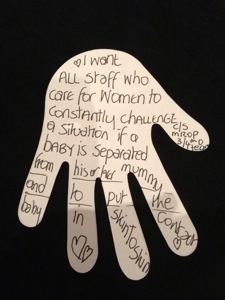
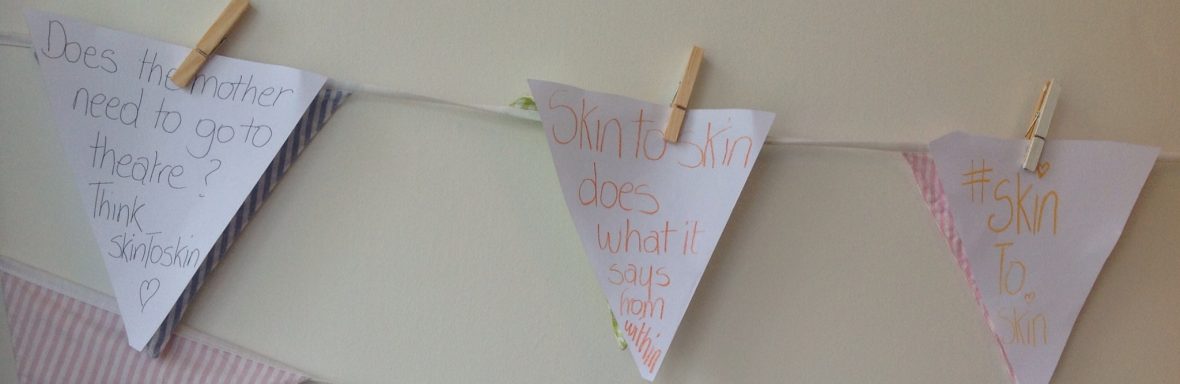
I will have been a midwife for 23 years this June. I see myself as constantly evolving and realise that I will never reach my destination – I don’t want to though I want to keep growing each day . By having this approach I  hope that I am open to women’s families and colleagues voices .I extol the long term and short term virtues and benefits of skin to skin contact at any opportunity .  Being a midwife means being a strong communicator and embracing oneself as an ambassador for global women . It’s about being current and modern despite age or experience – this ethos should apply to all who work in the NHS . Choice and consent should be embedded into our role as advocates . Cotinuity of carer must be a priority plus a positive communicative relationship  between the midwives  and  women all embedded into what we do just as much as a building needs a roof , windows , a door and warmth .  

MatExp 

Mat Exp is all about maternity experience . It’s a change platform where anyone can participate , discuss and suggest new ways to assess , plan, implement and receive care – putting the family first in Maternity services . MatExp is also about staff who are involved in this specialty and how we can improve their experiences too. This is why I adore it – everyone has an equal and valid voice – there is no hierarchy and ideas are constantly flowing . MatExp HQ exists in a virtual digital sense – it’s everywhere and a testament to the true power of social media . Due to MatExp I’ve learnt more about PostTraumatic Stress Disorder due to birth trauma which can affect men as well as women . I understand  more about the feelings of families when their babies have been stillborn or died after birth . I have been able to connect with women, families, health professionals and radicals to  spread the word about why collaboration works because we are actually doing it  . I have also met the most amazing people from all walks of life and feel I have connected with them in making a difference . Just search #MatExp on twitter or take a look at the website HERE to read about who is already involved and how you can get involved . 

So now you know what sparks joy in me- I’d like you to visualise Change as a form of  decluttering – it’s not necessarily forgetting about the old – but it’s making sure it’s archived so that we can look back as well as forwards and see why it’s so important to keep moving shifting and changing. Let’s make NHS care “Spark Joy” in the people that use it and the ones who work in it .

As a form of reflection think of four things that Spark Joy for you within your own work and life and write about them . 

Thank you for reading 

Jenny ❤️ 

Ps To my grown up children , my family and friends you also spark joy within me and you are and always will be in my heart – thank you ❤️

Being busy as a midwife, Birth, Courage, Discharge from hospital, Kindness, Learning, Midwifery and birth, Newborn, NHS, Patient care, Postnatal care, Skin to skin contact, Teaching, UK Blog Awards 2016, Women's rights

The UK Blog Awards 

I have entered this years UK Blog Awards in the Health Category to raise the public profile of midwifery in a positive light . 

Compassion is a crucial part of any midwife’s role and I find that blogging helps me to open the window of my midwifery soul through the written word.

It’s crucial that women and families have access to midwifery support now and in the future . Social media is a great way to connect to others and also to learn , inspire and lead. 

You can vote for me BY CLICKING HERE

Thank you for your ongoing support and for reading and sharing my blog . 

With love from Jenny 💛 


Babies, Birth, Breastfeeding, Discharge from hospital, Kindness, Learning, Midwifery and birth, New parents, NHS, Postnatal care, Skin to skin contact, Teaching, Women's rights

Transfer from hospital to Community care – planning in maternity services 

There is so much written about discharge planning for Care of the Elderly / Unscheduled care / patients requiring rehabilitation .

Currently there are extra pressures on maternity services and I have set out my objectives as to why I want to discuss postnatal discharge planning below 

1.To highlight beacons of positivity 

2.To inspire discussion 

3. To make discharge planning an intrinsic part of the admission process 

4. To identity where a same day transfer should not be promoted

5. To make the actual ‘time of discharge’ a governance issue  

6. Share good practice and eliminate bad practice 

7. Raise the profile of effective discharge planning in maternity services 

I have learnt from others and by listening to families how the NHS could streamline the discharge process I’m certain that this would make a positive impact on staff time , families understanding , effective communication , reduce complaints and develop a well rounded understanding of the  discharge process. 

Going home with a newborn is seen as an easy and smooth process so my blog will try to help parents as well as midwives and maternity workers to see that this is not always the case. 

The best time to be discharged home is in the morning , however the pressure on postnatal wards is immense and they have one of the fastest turnovers in the NHS . So often we hear of women and newborn being sent home at ridiculous hours and  HERE is an article about this in Mother and Baby 

So how can we streamline the discharge process ? 

A. Find out if the family have transport home 

B. Start the discharge paperwork by checking address and phone number are correct 

C. Ensure medication to take home is requested as soon as possible 

D. Promote and explain why prolonged skin to skin contact will ensure not only breastfeeding success but also maternal and newborn wellbeing and that continued skin to skin contact is important as well as talking to the newborn and feeling calm (it’s crucial to discuss co-sleeping and I usually direct parents to ISISSLEEP as well as explaining – I’m not going to go into depth about this now, but  I do with parents.  

E. Ask about support at home – visitors who come and help are very valuable and aid recovery and coping . At the same time it’s important that the new family have some time alone in order to gain confidence in being new parents and learning to recognise various cues that their newborn makes .  

F. Go through thoroughly signs and symptoms of illness for mother and baby and mention sepsis – any infection caught early improves the outcome. 

G. Ensure all levels of midwifery staff are competent to discharge women and babies home – in busy times when there are pressures on the service this will facilitate an “all hands on deck” situation 

H. Employ a discharge facilitator who can assist clinical staff to organise the paper trail 

I. Have a generic checklist to refer to primarily so that women and families can see what the process entails and secondly so that staff do not miss any of the steps involved and this will avoid mistakes and maintain communication at all levels .  

J. The first point of contact in regard to any queries should always be the labour ward and / or community midwife . Midwives are responsible for postnatal care up to 6 weeks post birth – I am proud to say that when women present at labour wards they are seen quickly – a walk in centre or a triage service are not equipped to deal with postnatal care – midwives are . 

Explanation, discussion , allowing time and two way communication are all integral to a successful discharge process . I like to tell families that the discharge is in effect a transfer of care to the community midwifery team and also what to expect from the visit. Midwives do not expect families to be up , dressed and ready with the house perfect – they are visiting to see how families  are feeling and coping . To assess if the baby is feeding well and to give support . 

Rushing the process because of pressure has no value and affects communication in a negative manner – it’s so valuable to discuss why discharging takes time at antenatal group and have information on discharge at clinic appointments . 

Ideas such as group work on the postnatal ward to increase questions and save time are being developed in various NHS trusts and discharge guidelines should be updated regularly to match the process. 

Talking about safe regular analgesia and how to take medication will improve recovery , reduce infection , help mobility and be key to reducing venous thromboembolism . Perineal pain is real – it hurts – but in the first day it may not be as bad until the woman arrives home and starts to question her pain threshold . Pain management is part of postnatal care and can make the difference between good recovery and feeling awful for days . 

Perinatal mental health care is gradually improving and it takes skill and experience for midwives to recognise it if the woman is reluctant to disclose . Continuity of carer and knowing ones midwife makes talking about postnatal depression and anxiety easier – but we still have a lot of work to do . HERE The Guardian highlights perinatal anxiety . Post Traumatic Stress Disorder is now a recognised illness caused by trauma around birth – communication and compassion at birth can reduce this and I recently received a letter from a woman telling me that skin to skin contact helped her to cope during an emergency situation – so there’s something to consider .  I am proud to know Emma Sasaru who has PTSD and courageously BLOGS  in order to help other mothers to recognise the signs and how to seek help . 

As the midwife completing the discharge YOUR responsibility is also to ensure the baby is feeding  and that you have observed a feed and given the mother support. Talking about maintaining milk supply and support groups as well as how to recognise that the baby is thriving must be discussed . It’s just as important to explain and know the family understands how to make up milk if the baby is not being breastfed.

 The neonatal examination is not a future prediction of health it just says the baby is fine at the moment it is done . Any signs like continuing sleepiness, a very quiet baby , poor muscle tone and slow weight gain might be indicators  of poor health – mothers usually have an instinct about these things so listen well and get the baby seen by a paediatrician – don’t manage the baby at home without senior input . 

Finally time of discharge is an issue – do families reall want to go home at 23.00 or 3am ? It’s a personal choice but CHOICE it must remain there is no place for sending women and newborns home in the middle of the night – does it happen in any other department? I have never heard of children being sent home in the night or elderly patients so why should we accept it for women or maternity services?  If you have concerns that families are bring sent home at inappropriate times there is action you can take – escalate it to your line manager , fill out an incident form , discuss at your team meeting and raise with your governance lead. Ask other units what they do and be pro-active . 

The main point I want to get across is that discharge from hospital is a complex process . It is much more effective when there is two way communication between midwives / obstetricians and families . Talking about going home must start as soon as the admission process starts. Discharging someone home must be a high quality , thorough , kind and efficient task. It must also be individualised and embody compassionate care . Use your skills in effective discharge and teach them to future midwives – it’s important to share good practice. 

I hope I have raised your interest  in discharge planning . I appreciate and value all feedback and understand there may be some points I have missed . My main aim is to promote thought , discussion and change . 

❤️Thankyou for reading  

Love Jenny ❤️

Birth, Courage, Kindness, Midwifery and birth, Newborn, NHS, Skin to skin contact, Women's rights

Who interrupts skin to skin contact? 

When a newborn is gently placed into skin to skin at birth with its mother complex intricate physiological and psychological processes begin. As midwives we must be mindful of the next stage and fight back the strange urge (that seems to be a part of our midwifery culture) to move the baby . 

Evidence shows that  if the baby is moved after any period of time before the first breastfeed then the whole process must begin again, it’s like restarting a stop watch. 

Patience and a detailed awareness about the physiology of breast feeding , mammalian responses ,the effects of intervention and why an early breastfeed will be an indicator of long term breast feeding success must be reinforced . The continually evolving fresh bank of ever expanding new research is gaining momentum. Emerging facts  about  ‘skin to skin contact’ such as it’s ability to reduce postpartum haemorrhage (this article can be read HERE ) , also the positive effect that skin to skin has on long term maternal mental health should be making us all sit up and think . If newborns experience skin to skin contact for long periods of time both at and post birth in combination with positive parenting the newborn will grow into a child and then an adult with an increased ability to socialise,  be compassionate and be kind. 

One thing stands like stone to me though and it is this 

Which mammal do we know that puts its trust in another mammal and then allows that other mammal  to take control of and/or disrupt the connection between the mother and the newborn ? 

I have had so many emails and messages from mothers, fathers  , future midwives , midwives , doctors ,peer support workers, friends  and family about ‘who owns the baby ?’ I feel the time has come for us all to challenge the constraints put upon us and to encourage women to shout out … 

 “this is my baby – I grew this baby I nurtured this child – I am the birth mother and I will not let anyone move my baby without my consent – I am part of the dyad and we work together – we two are one ” 

I would like to see more written about skin to skin wishes for birth if the situation becomes medicalised or complex – so that the other parent can have skin to skin contact . I would also like  other health care professionals  to consider whether they should be holding a baby without a reason. A family must also be fully informed and educated on the unseen detrimental effects of separation on the birth mother and the newborn . 

Can we honestly say that we inform future parents that if their newborn is moved out of skin to skin contact too soon that it will affect their baby’s ability to breastfeed and the mothers ability to lactate  ? Do we inform women that skin to skin contact gives a feel good factor ? 

Have we made birth a production line business ? For example how many times have you heard “is the woman in ‘Astra birth room’ ready for transfer to postnatal ward yet ?” Without the woman herself being asked ? Do we have a  constraint around time of birth to time of transfer to the ward ? Is it fair and equal that woman who give birth within a Midwifery Led Unit / Birth Centre can stay in the room they are in until they go home ? Whereas women who give birth on a labour ward are moved and then even separated from their partner in some hospitals ? 

These are all my thoughts and I am writing to provoke questions in my own practice as well as trying to help families and midwives . My skin to skin journey is an ongoing one and any feedback will be valued and appreciated 

Thank you for reading 

❤️Jenny ❤️ 

Being busy as a midwife, Courage, Kindness, Learning, Midwifery and birth, Skin to skin contact, Teaching, Women's rights

If you are a midwife – I am just like you ❤️  

I am two people sometimes my identities merge into one sometimes they separate. First and foremost I am a mother who is a writer and expresses her work through writing, art  and social media. Then I am a midwife I work full time clinically and I do shift work. This realisation hit me after seeing the film ‘The Lady In The Van’ where Alan Bennett is portrayed by two actors  showing his two roles – one as the writer Alan Bennet and the other Alan Bennett the man with the house and life to live 

In addition to my NHS role  I also present regularly usually to NHS trusts Midwifery Societies and to other NHS Departments usually around skin to skin contact at birth – I also include discussion around  courage and challenges within the workplace .  Sometimes my  two ‘lives’ meet sometimes they go their separate ways however I am the conduit of my own story . I say this because I blog about some of the experiences I have had within my own work and also talk about them in my presentations . By using these experiences my aim is help others to gain confidence or consider their own approach to colleagues and to women. 

I reflect on each occurrence and then I depersonalise it to write in the third person – the aim of my stories is to give the reader hope for themselves and for others . I want midwives to realise that I am just like them – I get up I go to work I come home and then I work some more .  I work shifts and weekends . There are occasions when I have beans on toast or cereal for dinner and I have even been known to spend a full day in my pyjamas if I need a good rest . There are times on a shift when I may not get a break and / or go home late. 

I have had feedback that some of my blogs hit a nerve – my main passion is to promote skin to skin contact for all birth settings where possible , however if my platform enables me to speak out for others who are unable to speak out for themselves , then I will do it .  I would like to pose a question to you all – 

Are you aware of why some midwives do not rejoice in the work that other midwives do? 

Why is this ? As far as I am concerned it is stopping us from moving forwards as a profession. The midwives that do extra mural work are not trying to glorify themselves but they are simply filled with passion. Their drive is not something they find easy and they get tired and disheartened but they keep going – that does not mean they are any better, wiser or more respected than those doing their role and nothing extra – it just means they want to help the profession to be recognised and all of us to be equally valued. We are all relevant voices so try to respect one another and be professional , compassionate and kind to one another – this will then drip onto the women and families we care for . Consider how you react to a midwife who might be in the public eye and realise that you are equal partners in midwifery . 

Reflect back to your last month at work – have you been in any situation that you felt uncomfortable in ? Did you witness a colleague being upset? Did you see or hear something that concerned you ? How did you feel ? What did you do ? Did you regret not saying anything either because the time was not right or just because you felt scared? How do you think the other person felt ? Who did you talk to about it ? Your supervisor of midwives ? Your colleague ? Your manager ? Your family ? The NMC? Your union representative or steward? Your friends or no one ? It’s really important that when something emotional happens in your life that you can debrief about it . Personal or joint reflection helps us all to  gain feedback from ourselves  and from others and it’s SO important that this feedback includes positivity as well as critical analysis . Why ? There is a plethora of research available  ON FEEDBACK  including the article you’ve just read . Search google scholar for research and articles on how nurses and / or doctors reflect

Keeping a diary each day will help you to reflect back with better clarity – time moves fast and soon the next week is upon us – the incident or situation will pass you by . Unbeknown to you stressful situations,  scenarios , whether they are large or small will slowly and gradually affect your physical and mental health . Things like weight gain , anxiety and depression are directly  to linked to stress in the workplace and can impact negatively  on safety , staffing levels , good care and achievements  for midwifery . 

I suggest you buddy up with someone you trust , someone you can reflect with , plan with and rejoice with. Try to remember why you chose midwifery and the massive impact that your care will  have on a woman and her family . 

We all have the same dreams 

Thank you for reading please leave comments as this helps me to learn and reflect 

Jenny ❤️

Birth, Courage, Kindness, Midwifery and birth, Newborn, NHS, Nursing, Skin to skin contact, Women's rights

Skin to skin

This is my first blog day – blog sounds such a sad word it needs an injection of sunshine So here is my sunshine injection – all about Skin To Skin .
I want to inspire midwives to think carefully about the precious time before birth when the woman is approaching motherhood and the unborn child is about to become independent —- or is it?
Babies need their mothers love at birth they need to be held snuggled, have skin to skin and to feed – all those weeks inside and suddenly “POW”it’s lights, camera, Facebook,photos,text “what’s the weight?” Pressure to be back to normal for the woman (is there such a thing? Media pressure to run on a sandy beach holding a beautiful baby wearing white linen – this is not reality – reality is tiredness overwhelming love , sore perineum , visitors who don’t iron – midwives be honest – help the mother and child have so much skin to skin they overdose on love – talk about bed sharing honestly (Basis online is evidence based information about safe sleep for babies founded by Prof H Ball of Durham Uni is wonderful ) – remember we have become westernised – the cot , disposable nappies , and everything that goes against mammalian responses – let’s get back to nature and promote skin to skin for three hours – and let’s be real – let’s be human xxx #skinToSkin xxx